|
Whether Alexander the Great was Greek or just loved things Greek is not important. What is important is that he spread Greek ideas throughout the world in what is known as the Hellenistic Period and was perhaps the most important single person in western civilization with the possible exception of Jesus Christ.
|
|
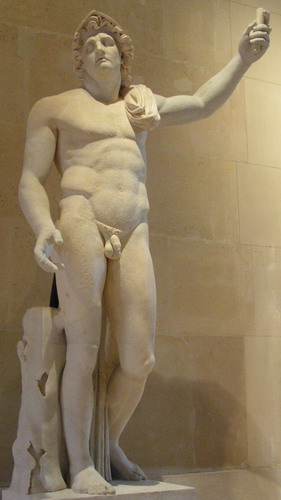 During the classical period in Athens, the Macedonians, to the north, were considered barbarians, most likely because their dialect seemed foreign to the Greeks of
the south.
In other words the term barbarian did not actually mean uncivilized but not-understandable, though to us it brings to mind people gnawing on raw meat or the skulls of their enemies. This is not what it meant to the ancient Athenians though one could of course argue that they saw everyone who was not Athenian or spoke any language besides Greek as being a second tier civilization. (Some people say the Greeks still feel this way). The Macedonians admired the southern Greeks and King Phillip
hired the philosopher Aristotle to tutor his young son Alexander. Aristotle was actually a 'barbarian import', having been born in Macedonia and raised in the royal court, his father being the royal doctor. Alexander, according to Plutarch was actually the son of Phillip's Queen, Olympias, and Zeus on one of his earthly visits. During the classical period in Athens, the Macedonians, to the north, were considered barbarians, most likely because their dialect seemed foreign to the Greeks of
the south.
In other words the term barbarian did not actually mean uncivilized but not-understandable, though to us it brings to mind people gnawing on raw meat or the skulls of their enemies. This is not what it meant to the ancient Athenians though one could of course argue that they saw everyone who was not Athenian or spoke any language besides Greek as being a second tier civilization. (Some people say the Greeks still feel this way). The Macedonians admired the southern Greeks and King Phillip
hired the philosopher Aristotle to tutor his young son Alexander. Aristotle was actually a 'barbarian import', having been born in Macedonia and raised in the royal court, his father being the royal doctor. Alexander, according to Plutarch was actually the son of Phillip's Queen, Olympias, and Zeus on one of his earthly visits.
In the 4th Century King Phillip of Macedonia took advantage of the disunity of the Greek city states, defeating an Athens that was paralyzed by political infighting, in the battle of Chaeronia in 338 BC. This put an end to the Delian league. He then unified all the Greeks to the south of his kingdom in Pella.
When Phillip was assassinated in 336, the 20 year old Alexander became the new king of Macedonia. He immediately ordered the execution
of all of his potential rivals and marched south with his armies in a campaign to solidify control of Greece. He continued to unite the rest of the Greeks in Asia Minor and traveled east where he conquered Greece's great enemy Persia, as well as the lands of Egypt and as far as India. By then he was known as Alexander the Great and this
era became known as the Hellenistic Age, when the influence of Greece spread throughout the known world. To this day there are pockets of people between the Mediterranean and India who claim to be descendents of Greeks in Alexander's army. Besides bringing Hellenism to the people of the east he brought eastern ideas to the people of Greece. When Alexander died of a mysterious illness in Babylon on June 10, 323 BC, he was only 32 years old. The lands he had conquered were divided up and named for his three
generals: the Ptolemids in Egypt, the Antigonids in Greece and Macedonia and the Seleucids in Syria, Asia Minor and the Middle East. (See map)
|
|
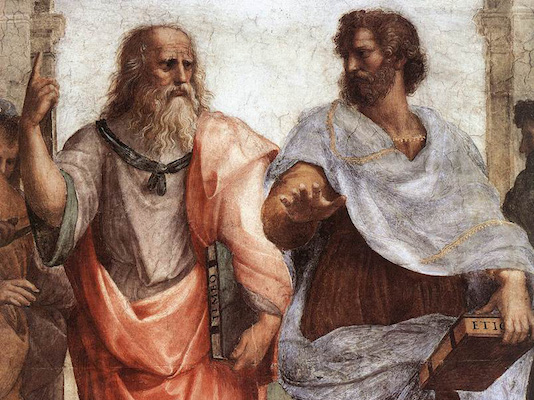 During the Hellenistic period and on into the Roman period Athens was what a University town is today. Still a beacon of learning, Plato's Acadamy and Aristotle's Lykeion were expanding and attracting more and more students. The art of Rhetoric had become essential for politicians of the Greek world who came to Athens to study in the school
of Isokrates, a rival of Plato. The schools sent a flow of educated students out into the world who themselves became teachers
of
their
own people, as well as scientists, mathematicians, philosophers, and political and military leaders. After Plato died in 347 B.C, Aristotle left Athens and moved to Assos (nowadays called Behramkale), in Asia Minor. Assos was a city by the sea, 10 km from Lesbos. There, with the help of other philosophers (including Theophrastos and Xenokrates) he founded a philosophy school, under the protection of Hermeias, the ruler of Assos and Atarneos. Aristotle soon married Pythias, who was Hermeias niece,
and they moved to Mytilene, in Lesvos, where they lived for two or three years. Most historians of science agree that it was during this period that Aristotle began his intensive study of zoology, which is described in his books "History of animals", "Parts of animals", "Generation of animals"
and a few others. In those books Aristotle describes many fish, birds, insects and land animals that he found in Lesvos, and several specific places on the island are mentioned in those works. In 343 or 342 B.C. Aristotle and Pythias moved to Pella (the ancient capital of Macedon) at the invitation of king Phillip II, to take care of the education of prince Alexander. Although Aristotle's zoological work is not as well
known as his logical and philosophical books, it was
a vast encyclopedia of natural history and was surpassed only in the 18th century. There is a famous saying by Darwin, who was much impressed the first time he read Aristotle's zoological books: "I had not the most remote notion what a wonderful man he was. Linnaeus and Cuvier have been my two gods, though in very different ways, but they were mere schoolboys to old Aristotle." During the Hellenistic period and on into the Roman period Athens was what a University town is today. Still a beacon of learning, Plato's Acadamy and Aristotle's Lykeion were expanding and attracting more and more students. The art of Rhetoric had become essential for politicians of the Greek world who came to Athens to study in the school
of Isokrates, a rival of Plato. The schools sent a flow of educated students out into the world who themselves became teachers
of
their
own people, as well as scientists, mathematicians, philosophers, and political and military leaders. After Plato died in 347 B.C, Aristotle left Athens and moved to Assos (nowadays called Behramkale), in Asia Minor. Assos was a city by the sea, 10 km from Lesbos. There, with the help of other philosophers (including Theophrastos and Xenokrates) he founded a philosophy school, under the protection of Hermeias, the ruler of Assos and Atarneos. Aristotle soon married Pythias, who was Hermeias niece,
and they moved to Mytilene, in Lesvos, where they lived for two or three years. Most historians of science agree that it was during this period that Aristotle began his intensive study of zoology, which is described in his books "History of animals", "Parts of animals", "Generation of animals"
and a few others. In those books Aristotle describes many fish, birds, insects and land animals that he found in Lesvos, and several specific places on the island are mentioned in those works. In 343 or 342 B.C. Aristotle and Pythias moved to Pella (the ancient capital of Macedon) at the invitation of king Phillip II, to take care of the education of prince Alexander. Although Aristotle's zoological work is not as well
known as his logical and philosophical books, it was
a vast encyclopedia of natural history and was surpassed only in the 18th century. There is a famous saying by Darwin, who was much impressed the first time he read Aristotle's zoological books: "I had not the most remote notion what a wonderful man he was. Linnaeus and Cuvier have been my two gods, though in very different ways, but they were mere schoolboys to old Aristotle."
|
|
 Lately there has been as much discussion
of the sexuality of Alexander as there was during the time of his
rule over whether he
was a man or a God. While
the people of Macedonia don't want to believe that their national
hero was gay, they can take heart in knowing that by contemporary
standards most ancient Greeks were gay. Sexual attraction between
men was considered normal in Classical Greece as well as in Alexander's
time. Men of culture and education, like Alexander, loved beauty,
and beauty is beauty whether it is in the form of a woman or a man.
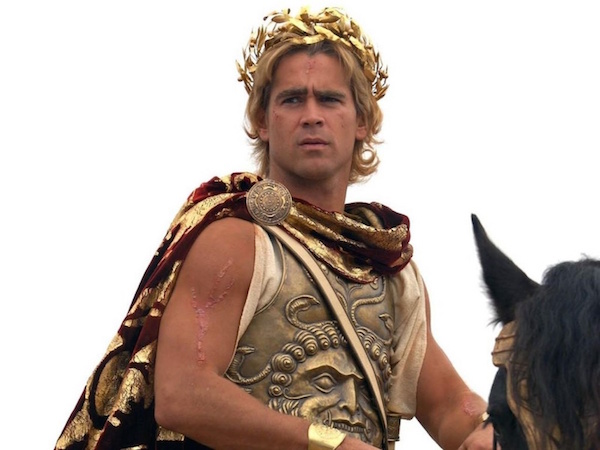
Regardless, when Oliver Stone brought the ancient king back
to life in his movie Alexander,
a group of 25 Greek lawyers threatened to sue him and Warner Brothers
for what they claimed was an inaccurate portrayal of history. They
were offended by the effeminate nature of Stone's Alexander, as
were the critics. They needn't
have bothered. The film was a 150 million dollar disaster though
from reading reviews and discussing the film I have come to the
conclusion that people who know history liked it. People who
know movies didn't. The point is that 2000 years later Alexander
the Great
is still a controversial figure, whether he was man or
God, gay or just effeminate. So Alexander still lives.
But if he is still 'The Great' why does he need 25 Greek lawyers
to defend him? Homosexuality (rather bisexuality) was common place in ancient Greece,
but it
was regarded as a highest form of human communication, as a sacred bond between
men, that lifted them to divine sharing, to refinement of spirit. Philosophers
rather than philanderers were born from such relations. This is the issue:
not whether you depict Alexander as a homosexual, but how you do it. Jewelry and eyeliner does not do homage to a kind of relationship
that they themselves aspired to be as equal to that of their heroes, Achilles
and Patroclus. Lately there has been as much discussion
of the sexuality of Alexander as there was during the time of his
rule over whether he
was a man or a God. While
the people of Macedonia don't want to believe that their national
hero was gay, they can take heart in knowing that by contemporary
standards most ancient Greeks were gay. Sexual attraction between
men was considered normal in Classical Greece as well as in Alexander's
time. Men of culture and education, like Alexander, loved beauty,
and beauty is beauty whether it is in the form of a woman or a man.
Regardless, when Oliver Stone brought the ancient king back
to life in his movie Alexander,
a group of 25 Greek lawyers threatened to sue him and Warner Brothers
for what they claimed was an inaccurate portrayal of history. They
were offended by the effeminate nature of Stone's Alexander, as
were the critics. They needn't
have bothered. The film was a 150 million dollar disaster though
from reading reviews and discussing the film I have come to the
conclusion that people who know history liked it. People who
know movies didn't. The point is that 2000 years later Alexander
the Great
is still a controversial figure, whether he was man or
God, gay or just effeminate. So Alexander still lives.
But if he is still 'The Great' why does he need 25 Greek lawyers
to defend him? Homosexuality (rather bisexuality) was common place in ancient Greece,
but it
was regarded as a highest form of human communication, as a sacred bond between
men, that lifted them to divine sharing, to refinement of spirit. Philosophers
rather than philanderers were born from such relations. This is the issue:
not whether you depict Alexander as a homosexual, but how you do it. Jewelry and eyeliner does not do homage to a kind of relationship
that they themselves aspired to be as equal to that of their heroes, Achilles
and Patroclus.
|
|
 Note to me from author Edward N. Haas: Note to me from author Edward N. Haas:
One of the most important sources of ancient
history is an individual named Plutarch who lived from 46 to 120 A. D. His most
important work is entitled: "The Lives of the Noble Grecians and Romans". It's
English version is volume #14 in the collection known as "Great Books Of The
Western World" published by Encyclopedia Britannica, Inc.. Turn to page 550 of
that volume #14, and, just below the middle in the right-hand column, you
will read Plutarch telling us as follows:
"When Philoxenus, his lieutenant on the seacoast,
wrote to him to know if he would buy two young boys of great beauty, whom one
Theodorus, a Tarentine, had to sell, he was so offended that he often
expostulated with his friends what baseness Philoxenus had ever observed in him
that he should presume to make him such a reproachful offer. And he immediately
wrote him a very sharp letter, telling him Theodorus and his merchandise might
go with his good will to destruction. Nor was he less severe to Hagnon, who sent
him word he would buy a Corinthian youth named Crobylus, as a present for
him."
Also see "Was Alexander The Great Bisexual?" written by a
Dr. Craig Johnson and is found on the web at www.bible-history.com/alexander-the-great/. In his article, he points out in
rather lengthy detail that there is no evidence for the notion that
Alexander had any kind of sexual affair with other males.
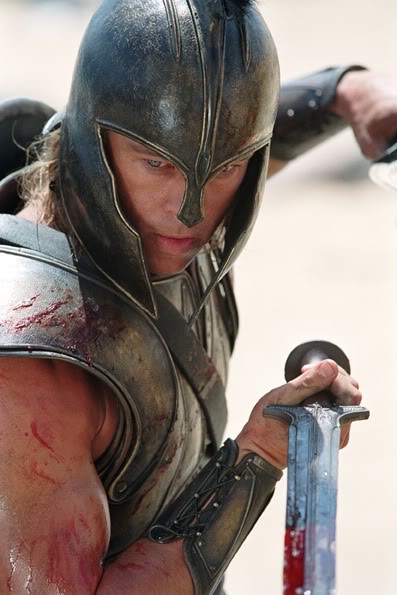
But man or God, straight or gay, Alexander the Great remains an important figure in the history of Greece. Though if Oliver Stone had used Brad Pitt instead of Colin Farrell we would not even be having this discussion and I would not have received so many e-mails on this subject from people who were bothered by the possibility that Alexander was gay. Who cares if Alexander the Great was gay? He conquered the world and spread Hellenism. Isn't that enough?
|
|