History of Greece
The Byzantine Period
|
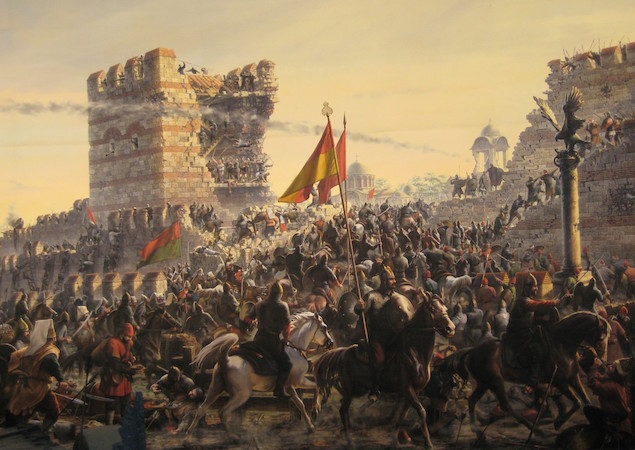
The Byzantine Period of Greek History is one of the least understood and the most important. The Byzantine Empire laid the foundations for Orthodox Christianity in Greece, the Balkans and Russia. The Fall of Constantinople meant the end of Christianity in the Middle East, the rise of Ottoman-Muslim power and the East-West friction that exists today. Byzantine Scholars brought with them from Constantinople the knowledge and art that would play a pivotal role in bringing about the Renaissance in Western Europe. (And unfortunately bypassing Greece entirely) |
|
In the 3rd century Attika is attacked by the Goths followed by the Huruli, Alemanni, the Franks, the Vandals and Sassanians. The Pax Romana is starting to fall apart. In the 4th Century the emperor Constantine converts to Christianity and moves the capital of the Roman Empire to the city of Byzantium on the shores of the Bosphorus, renaming it Constantinople. (City of Constantine). During this period a group within the church led by Father John Chrysostom, which believes in a literal interpretation of scripture, (as opposed to the allegorical interpretation of the Gnostics), seizes control of the church and begins to persecute as heretics all those who disagree, forcing many of them into hiding. Some believe the purest teachings of Jesus and his apostles went with them. If this is true it adds fuel to the belief that there is a hidden church that reappears from time to time in the form of groups like the Bogomils and the Cathars, only to be labeled heretics, and forced into hiding again. (Those who are not exterminated) These groups claim to be the true church. It is during the third and fourth century that Christianity goes from being an agglomeration of persecuted sects with a variety of beliefs and practices based on the teachings of Jesus Christ, to an enormous secular power that imposes its dogma on others, executes heretics, fights wars and basically enriches itself as a self-serving institution. |
|
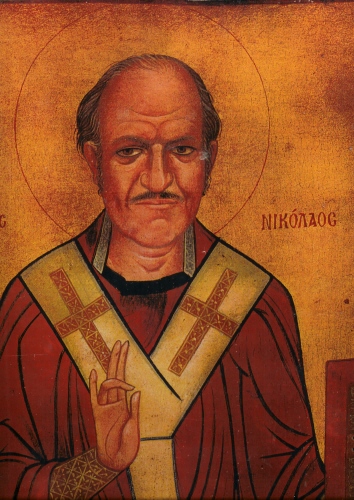
The 7th and 8th centuries see the rise of Islam and there are a number of attacks by the Arabs with Crete falling in 823. If not for Greek-fire, the Byzantine's secret weapon, Constantinople would have fallen too. An explosive and incendiary substance made from sulphur, pitch and petroleum Greek fire's effect was the equivalent of what airplanes and tanks had on 20th century warfare. It enabled a smaller Byzantine force to defeat a much larger enemy. The substance was squirted from bellows mounted in the Byzantine ships and caused great terror and destruction. In 726 Emperor Leo and his advisors conclude that perhaps the reason for these attacks and the near destruction of the empire is that they have somehow managed to anger God. Leo hits upon the idea of destroying religious images (Icons) to appease God, since their veneration comes close to breaking the commandment about idolatry. This policy of Iconoclasm, (which means image breaking) divides Byzantine society and politics for the next 120 years. The last iconoclast emperor is Theophilos. After he dies in 842, his widow Theodora acting as regent for their young son, Michael III restores the veneration of Icons as an acceptable form of worship. |
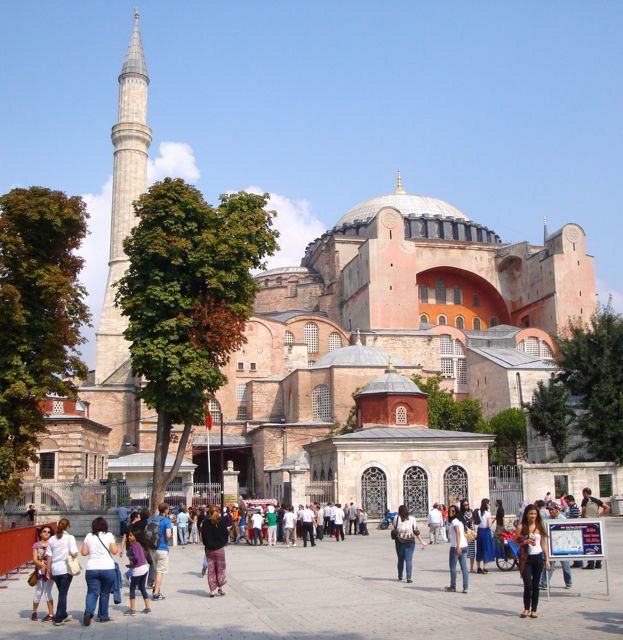 In 364 the empire officially splits into the Roman Empire in the west and the Byzantine Empire in the east. As Rome declines, Constantinople becomes more important. In 394 The Emperor Theodocious declares Christianity the official religion of the empire, outlawing the worship of the ancient Greek and Roman Gods. This is the beginning of the Byzantine empire which lasts a thousand years. Greek replaces Latin as the official language, monasteries and churches
are built
and religious art in the form of frescos, icons and mosaics become the primary form of artistic expression in a society that has no separation of church and state whatsoever. In 529 the emperor Justinian conquers the land to the south as well as North Africa and Italy, then declares the study of the ancient Greek philosophers of the classical period to be illegal. The only philosophy of the empire is to be Christian theology. The
In 364 the empire officially splits into the Roman Empire in the west and the Byzantine Empire in the east. As Rome declines, Constantinople becomes more important. In 394 The Emperor Theodocious declares Christianity the official religion of the empire, outlawing the worship of the ancient Greek and Roman Gods. This is the beginning of the Byzantine empire which lasts a thousand years. Greek replaces Latin as the official language, monasteries and churches
are built
and religious art in the form of frescos, icons and mosaics become the primary form of artistic expression in a society that has no separation of church and state whatsoever. In 529 the emperor Justinian conquers the land to the south as well as North Africa and Italy, then declares the study of the ancient Greek philosophers of the classical period to be illegal. The only philosophy of the empire is to be Christian theology. The |
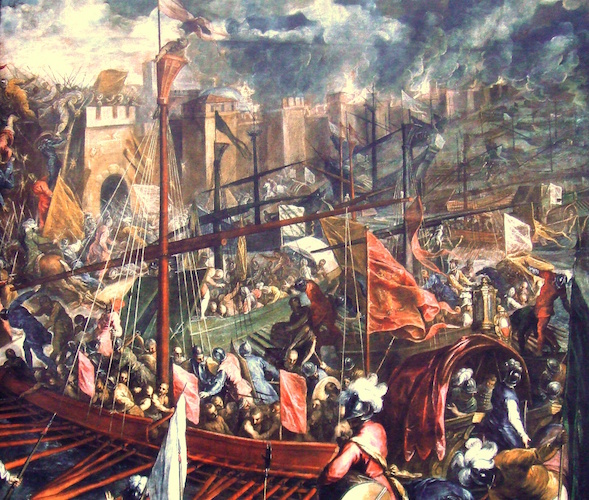
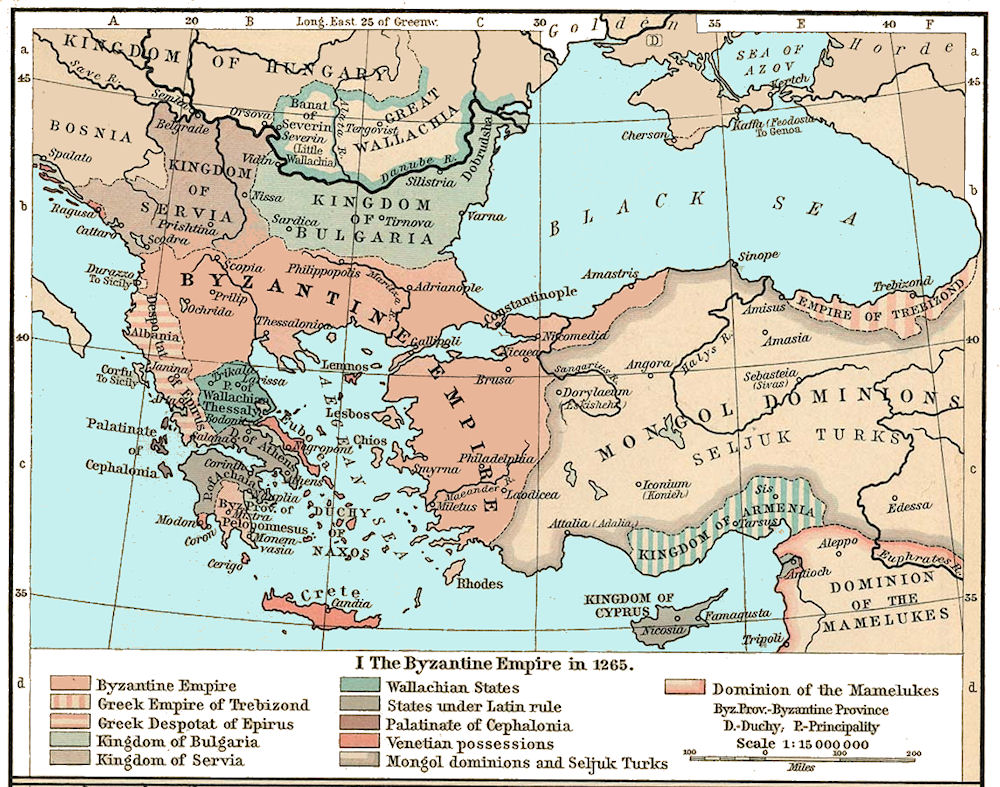
In 1204 the Frankish crusaders, on their way to retake the Holyland during the 4th Crusade, stop at Constantinople, sack it and install their own government. Constantinople becomes the capital of a Latin empire when these 'crusaders' capture Thessaloniki and most of central Greece and much of the Peloponnese. These areas are broken up into states or fiefs as in a feudal society, ruled by nobles. While the Franks and the Byzantines fight each other and amongst themselves the Venetians are busy taking over the island of Crete and other essential ports for their new role as traders and merchants in the Mediterranean. Following the sack of Constantinople, the town of Nicaea becomes a centre where monks establish a school of philosophy that includes not only Christian philosophy but also classical ancient Hellenic culture. This period also results in some of the most glorious iconography produced. |
|
During the 4th Crusade Athens becomes the fiefdom of Otho de la Roche from Burgundy. He passes the city on to his son Guy de la Roche who is declared Duke of Athens by King Louis IX of France. Athens is now a Dukedom. In 1308 Walter of Breinne inherits the Dukedom of Athens and invites mercenaries from Catalan to help defend his city. The Catalans are an unruly bunch and after he decides he needs to send them home, or anywhere, they turn on Walter, defeating him. They make one of their own Duke, Manfred of Sicily. In 1387 the Florentine Nerio Acciajuoli invades Athens and becomes a popular leader. The Florentines are the most accepted of the rulers by the Athenian population and many stay in the city even after the conquest by the Ottomans, intermarrying and Hellenizing their names. (The Iatros or Iatropoulos family claim descent from the Midicis.) |
|
|
|
Most of the sources seem to overlook the fact that while the Byzantine Empire was Greek speaking and its idealism was based on a singular interpretation of both Christianity and on Roman Hellenism - that it was not Greek ethnically. Most of the Emperors were Armenians, Syrian - in terms of dynastic origins. The only Dynasty that was distinctly 'Greek' was that of the Palaeologues and it was through their bungling and family disputes and general lack of imagination that the Empire fell as it did. It is also important to note that during the entire period of the Palaeologue dynasty and even before, there are hardly any new churches erected as most of their time and money is spent in family disputes and wars with what remained of the Crusaders scattered around the empire. Then suddenly after the beginning of the 16th century churches are built everywhere during the period of Ottoman rule. To understand modern Greece one has to realize that for centuries it was their dream to restore the Byzantine empire with Constantinople as capital of a Greater Greece. This is known as the 'Megali Idea', the Great Idea and nearly 500 years later it almost happens. But was their Megali Idea really a restoration of a Hellenic-Christian empire or a nationalistic pipe-dream that served the purpose of uniting the Greeks at the expense of peaceful relationships with their neighbors? |
 It is also during the 8th Century that the
Emperor Michael I imposes the death penalty on the Paulicans, a
Gnostic Christian group that is critical of the clergy
and rejects its cult of saints and icons and the veneration of the
cross (among other things). It is estimated that over 100,000 are killed
as heretics though a number of them survive in the eastern provinces
of the empire until they are deported to the Balkans in the
10th century.
It is also during the 8th Century that the
Emperor Michael I imposes the death penalty on the Paulicans, a
Gnostic Christian group that is critical of the clergy
and rejects its cult of saints and icons and the veneration of the
cross (among other things). It is estimated that over 100,000 are killed
as heretics though a number of them survive in the eastern provinces
of the empire until they are deported to the Balkans in the
10th century.
|
Help Support Matt's Greece Travel Guides |
