|
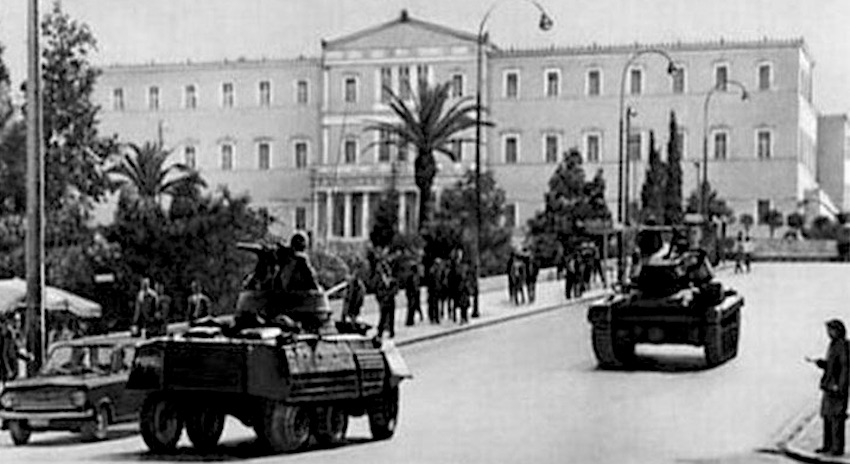
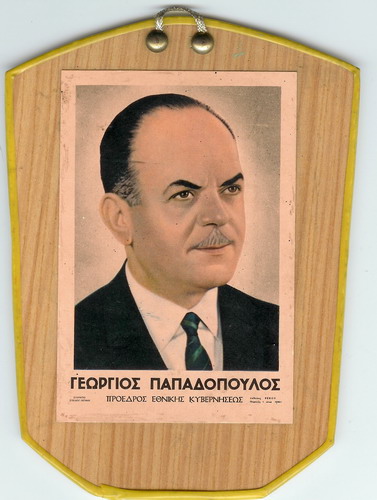
Using a NATO plan to protect Greece against a communist invasion, a handful of junior officers led by Colonel George Papadopoulos, fearful of the upcoming election and the rise of the left, overthrow the Greek government and declare martial law, outlawing strikes, labor unions, long hair on men, mini-skirts, the peace symbol, the Beatles, Sophocles, Tolstoy, Aeschylus, Socrates, Eugene Ionesco, Sartre, Chekhov, Mark Twain, Samuel Beckett, free
press,
new math and the letter Z
|
|
 During George Papandreou's eighteen month reign as prime-minister the problems between the Greek-Cypriots and the Turkish minority on the island of Cyprus come to a head. The island has been
under British
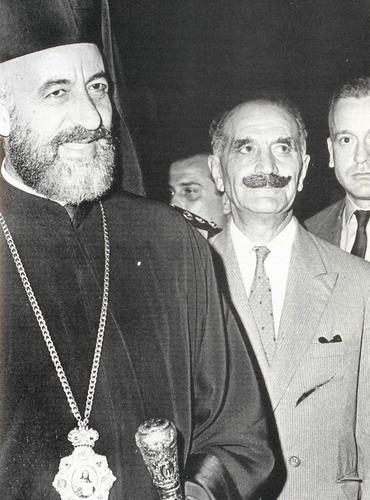
rule since 1878 and granted independence in 1960. There are some who want the island to unite with Greece (enosis), others who wanted to partition the Greek and Turkish Cypriots, and some who believe the two peoples could live together peacefully. In 1963 Archbishop Markarios (photo), the President of Cyprus, stirs up a hornets nest when he attempts to reduce the power of the Turkish minority in the Cypriot government. Turkey reacts with saber-rattling
and prepares to invade the island after fighting breaks out between the two groups. This is brought to an end by President Lyndon Johnson who tells the Greek ambassador: "#@%$ your Parliament and your Constitution. America is an elephant. Cyprus is a flea. Greece is a flea. If those two fleas continue itching the elephant they may just get whacked by the elephants trunk. Whacked good....We pay a lot of good American dollars to the Greeks, Mr. Ambassador. If your Prime
Minister
gives me talk about Democracy, Parliament and Constitutions, he, his Parliament and his Constitution may not last very long." The UN sends in a peace-keeping force and the Turkish-Cypriots are sent to enclaves, instead of being spread all over the island. The US proposes a union of Cyprus with Greece in exchange for the Turkish-Cypriots having their own self-governing areas protected by Turkish bases. (Turkey would also get the island of Kastellorizo in the bargain.) This
proposal is rejected by George Papandreou which does not win him any brownie-points with the Americans. He aggravates them even more when he begins releasing communists who had been languishing in prison since the end of the civil war. During George Papandreou's eighteen month reign as prime-minister the problems between the Greek-Cypriots and the Turkish minority on the island of Cyprus come to a head. The island has been
under British
rule since 1878 and granted independence in 1960. There are some who want the island to unite with Greece (enosis), others who wanted to partition the Greek and Turkish Cypriots, and some who believe the two peoples could live together peacefully. In 1963 Archbishop Markarios (photo), the President of Cyprus, stirs up a hornets nest when he attempts to reduce the power of the Turkish minority in the Cypriot government. Turkey reacts with saber-rattling
and prepares to invade the island after fighting breaks out between the two groups. This is brought to an end by President Lyndon Johnson who tells the Greek ambassador: "#@%$ your Parliament and your Constitution. America is an elephant. Cyprus is a flea. Greece is a flea. If those two fleas continue itching the elephant they may just get whacked by the elephants trunk. Whacked good....We pay a lot of good American dollars to the Greeks, Mr. Ambassador. If your Prime
Minister
gives me talk about Democracy, Parliament and Constitutions, he, his Parliament and his Constitution may not last very long." The UN sends in a peace-keeping force and the Turkish-Cypriots are sent to enclaves, instead of being spread all over the island. The US proposes a union of Cyprus with Greece in exchange for the Turkish-Cypriots having their own self-governing areas protected by Turkish bases. (Turkey would also get the island of Kastellorizo in the bargain.) This
proposal is rejected by George Papandreou which does not win him any brownie-points with the Americans. He aggravates them even more when he begins releasing communists who had been languishing in prison since the end of the civil war.
|
|
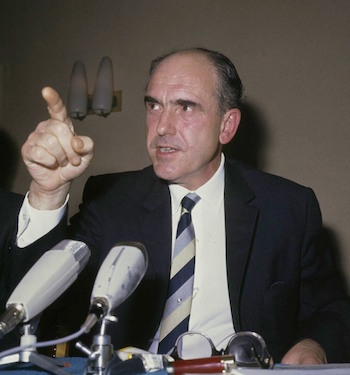 The US also is nervous about Papandreou's son, the Harvard-educated Andreas, who after leaving his job as head of the Department of Economics at University of California at Berkeley, has returned to Greece with his American wife and his family to take part in his father's government. According to de-classified documents, the CIA
wanted to spend several hundred
thousand dollars on candidates to defeat the Papandreous. In their words "we have kept an eye on Andreas Papandreou long enough to know, realistically speaking, that he belongs to the camp of individuals opposed to US interests. In contrast with the other candidates, Andreas is particularly strong in his views". Some officials in the Johnson administration believe the United States should take drastic measures to support a moderate government and weaken the political influence of the Papandreous
to avoid a resurgence of the communists. The State Department is not convinced that Andreas Papandreou is such a threat that they should funnel money into Greece to help defeat him. According to Secretary of State Rusk "the risk of the covert operation being revealed is much greater than the political gain it predicted". The US also is nervous about Papandreou's son, the Harvard-educated Andreas, who after leaving his job as head of the Department of Economics at University of California at Berkeley, has returned to Greece with his American wife and his family to take part in his father's government. According to de-classified documents, the CIA
wanted to spend several hundred
thousand dollars on candidates to defeat the Papandreous. In their words "we have kept an eye on Andreas Papandreou long enough to know, realistically speaking, that he belongs to the camp of individuals opposed to US interests. In contrast with the other candidates, Andreas is particularly strong in his views". Some officials in the Johnson administration believe the United States should take drastic measures to support a moderate government and weaken the political influence of the Papandreous
to avoid a resurgence of the communists. The State Department is not convinced that Andreas Papandreou is such a threat that they should funnel money into Greece to help defeat him. According to Secretary of State Rusk "the risk of the covert operation being revealed is much greater than the political gain it predicted".
As for the US embassy, a declassified memo states they believe that if elected, Andreas Papandreou would "...greatly reduce military spending, will gradually direct Greece away from NATO, and will gravitate to the Soviet block to promote Greek products. In this policy, he has found natural allies in the Left-wing and the Communists. In view of this, I believe it is highly critical for us to look more closely into Andreas'
relations
with the extreme Left-wing and the communists, find out how much money he has and where it comes from, and to the degree we are able, limit his real and potential political influence."
In other words the US Embassy wants to find some dirt on the Papandreous and destroy them, at least politically. To be fair to the Americans, they have spent millions upon millions in Greece to keep the Greeks from becoming communist and now here comes Andreas, after two decades in academic America,
who wants to have friendly relations with Russia. But the fact is that Papandreou is not a 'commie-lover' or 'left-wing fanatic'. In his past life in the United States he had been a supporter of Adlai Stevenson and Hubert Humphrey and worked on their campaigns. He is an economist and a visionary who wants to do what is best for Greece, not what is best for the USA. And what is best for Greece is getting the country out of the cold war and the pointless waste of money on defense. The Americans' fear of Papandreou
is the kind of fear-induced Pavlovian, knee jerk reaction that turns intelligent people into closed-minded fanatics and creates problems in relationships between countries that take generations to heal.
|
|
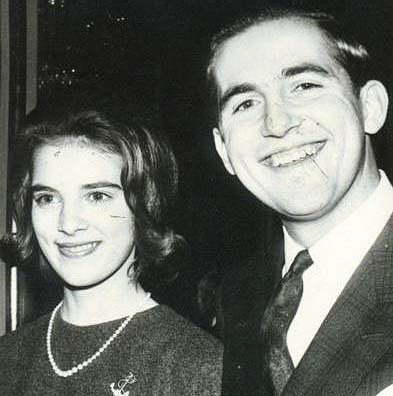 In the meantime King Paul dies in 1964. He is succeeded by a very young King Constantine (in photo with Queen Anna Marie) who on July 5
1965
deposes the popularly elected government of George Papandreou, which had found itself increasingly at odds with the Americans, the establishment and the King. A group of officers including Petros Garoufalias, the Minister of Defence, claimed to have discovered a conspiracy of young officers within the military, led by Andreas Papandreou, who were planning to overthrow the government, kick out the king and establish a dictatorship. The organization is called ASPIDA or 'Shield'. In the meantime King Paul dies in 1964. He is succeeded by a very young King Constantine (in photo with Queen Anna Marie) who on July 5
1965
deposes the popularly elected government of George Papandreou, which had found itself increasingly at odds with the Americans, the establishment and the King. A group of officers including Petros Garoufalias, the Minister of Defence, claimed to have discovered a conspiracy of young officers within the military, led by Andreas Papandreou, who were planning to overthrow the government, kick out the king and establish a dictatorship. The organization is called ASPIDA or 'Shield'.
Whether this conspiratorial organization actually exists is debatable, but it is used to create a constitutional crisis that brings down the Papandreou government. The senior Papandreou requests that King Constantine allow him to take over the Ministry of Defense from Garoufalias who has refused to step down. The king, whether he was within his rights or not, denies his request, stating that the investigation of Andreas for ASPIDA makes this a conflict of interest.
Papandreou
offers his resignation, not really expecting the King to accept it. But his resignation is accepted. Several members of Papandreou's Center Union, which is really just a coalition of parties and personalities, are convinced to defect and attempt to put together a puppet government that is more acceptable to the oligarchy. This group are known as the Apostates (defectors). The Palace, the Greek Military, the American military and CIA stationed in Greece finally have George Papandreou where
they
want him: Out of power, leaving Andreas exposed, without parliamentary immunity, to face charges in the ASPIDA affair.
|
|
The Greek people however, at least those who support the Center Union which happens to be the majority of the people, see the whole thing as a big farce and another example of the lack of true democracy in Greece. On New Year's day of 1966 the King gives his annual address and says the communists are responsible for the political agitation. Perhaps as a consequence of the king's speech the music of Mikis Theodorakis is banned on Greek radio. In March thousands
of Greeks
and foreigners take part in the annual peace march from Marathon to Athens to commemorate the third anniversary of the assassination of Grigoris Lambrakis. Demonstrations gather momentum, as the Papandreous begin another Anendotos (unyielding fight) traveling around the country raising support while criticizing the Apostate government which lacks any popular support and is basically unable to govern. A caretaker government is finally appointed to take the country to new elections to be held on
May 28 of
1967. (In the Greek constitution appointing a caretaker government is seen as the only way to have a fair election since a party in power would have an unfair advantage with the apparatus of the state at his disposal.). By the end of 1966 it is obvious to all that the Papandreou's revitalized Center Union is going to win this next elections by a landslide. When attempts to convince the Papandreous to agree to a postponement of the elections fail, King Constantine, Queen Frederika and a group of
generals plan a coup for May 13th. The name of this organization is IDEA.
|
|
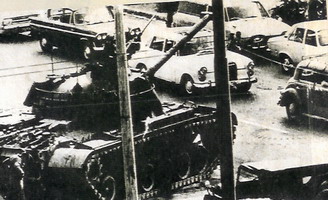 Unknown to the members of IDEA, another group led by Colonel George Papadopoulos, the liaison officer between the CIA and the KYP(The Greek CIA) and his cohorts Nikos Makerezos and Stylianos Pattakos, have planned their own coup for an earlier date. These Junior officers had worked closely with the members of IDEA and had used their information and influence to
occupy critical military and intelligence posts. On April 21st, using 'Prometheus' a NATO plan for neutralizing a communist uprising in case of an attack by a Soviet bloc country, they overthrow the Greek government and declare martial law. They begin arresting hundreds of known and suspected leftists, as well as politicians and public figures. They justify their coup by declaring that it is necessary to stop a communist threat and to cure the
society
of the cancer that threatens to destroy its Hellenic values. Unknown to the members of IDEA, another group led by Colonel George Papadopoulos, the liaison officer between the CIA and the KYP(The Greek CIA) and his cohorts Nikos Makerezos and Stylianos Pattakos, have planned their own coup for an earlier date. These Junior officers had worked closely with the members of IDEA and had used their information and influence to
occupy critical military and intelligence posts. On April 21st, using 'Prometheus' a NATO plan for neutralizing a communist uprising in case of an attack by a Soviet bloc country, they overthrow the Greek government and declare martial law. They begin arresting hundreds of known and suspected leftists, as well as politicians and public figures. They justify their coup by declaring that it is necessary to stop a communist threat and to cure the
society
of the cancer that threatens to destroy its Hellenic values.
Thousands of communists are thrown into prison or internal exile on islands like Makronissos. Martial law, censorship, arrests, beatings, torture, and killings are all part of the cure the colonels have in mind for Greece. Andreas Papandreou is imprisoned
for his
involvement in ASPIDA and would have most likely been executed except for the pressure on US President Lyndon Johnson by American academics. Despite his opinion that Andreas Papandreou benefited from his years in America and then betrayed it, Johnson orders the leaders of the colonels not to kill him. Papandreou is released eight months later and leaves the country to spend the next 6 years as a critic of the junta. The Junta claim to have truckloads of evidence that the communists were planning
to take over the country. This evidence is never produced.
|
|
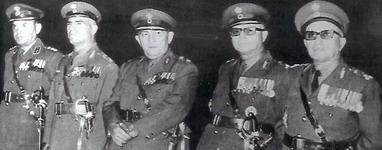 Even though there are close ties between the Colonels and the US intelligence, the belief that the CIA was behind the coup is difficult to completely accept much less prove. From all appearances the US Government and the CIA were also caught by surprise. Perhaps they had their money on the King's coup, and knowing this, the Colonels were careful in masking their intentions to their American counterparts since they did have close contact on a regular basis. Four of the five officers
who took power on the 21st of April 1967 were closely connected to the American military or to the CIA in Greece and if George Papadopoulos was on the payroll of the CIA then he was the first CIA agent to become Premier of a European country. But that still does not mean the Americans planned or ordered the coup, just as the members of IDEA had no idea that their junior officers were up to something.
Even though there are close ties between the Colonels and the US intelligence, the belief that the CIA was behind the coup is difficult to completely accept much less prove. From all appearances the US Government and the CIA were also caught by surprise. Perhaps they had their money on the King's coup, and knowing this, the Colonels were careful in masking their intentions to their American counterparts since they did have close contact on a regular basis. Four of the five officers
who took power on the 21st of April 1967 were closely connected to the American military or to the CIA in Greece and if George Papadopoulos was on the payroll of the CIA then he was the first CIA agent to become Premier of a European country. But that still does not mean the Americans planned or ordered the coup, just as the members of IDEA had no idea that their junior officers were up to something.
 Regardless of whether or not they knew about it, the US government does not take long to recognize the dictators as the legitimate Greek government,
just one week
after the coup. The British are not so easily convinced and take an extra day before they recognize the Junta as well. The Americans continue the massive military and economic aid to go with a growing military presence in Greece. If it is not an American imposed dictatorship it sure looks like one to the people of Greece. On May 5th US Secretary of State Dean Rusk declares that the Truman Doctrine does not permit interference in the internal affairs of Greece, a surprise to anyone who was around in the forties.
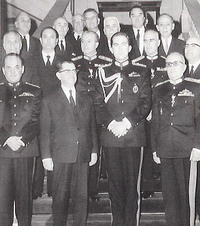
Shortly after the coup a photo is released showing King Constantine with the leaders, as a sign that it has the blessing of the palace. The King sends a sign to the Greek people that he is doing this against his will by clasping his hands in front of him. But for a country in which more than half the population don't even want a king it is a pointless gesture. The King, like the dictators is seen as a tool of outside interests or what in Greece is known as 'the foreign factor'. Regardless of whether or not they knew about it, the US government does not take long to recognize the dictators as the legitimate Greek government,
just one week
after the coup. The British are not so easily convinced and take an extra day before they recognize the Junta as well. The Americans continue the massive military and economic aid to go with a growing military presence in Greece. If it is not an American imposed dictatorship it sure looks like one to the people of Greece. On May 5th US Secretary of State Dean Rusk declares that the Truman Doctrine does not permit interference in the internal affairs of Greece, a surprise to anyone who was around in the forties.
Shortly after the coup a photo is released showing King Constantine with the leaders, as a sign that it has the blessing of the palace. The King sends a sign to the Greek people that he is doing this against his will by clasping his hands in front of him. But for a country in which more than half the population don't even want a king it is a pointless gesture. The King, like the dictators is seen as a tool of outside interests or what in Greece is known as 'the foreign factor'.
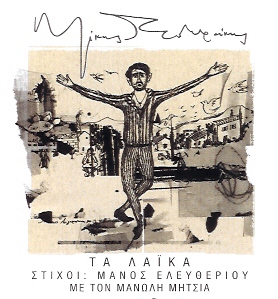 In June of 1967 the Junta announces Army Order No.13 which states that it is forbidden "...to reproduce or play the music and songs of the composer Mikis Theodorakis, the former leader
of the
now dissolved communist Organisation, the Lambrakis Youth because this music is in the service of communism ... to sing any songs used by the communist youth movement which was dissolved under Paragraph Eight of the Decree of 6 May 1967, since these songs arouse passions and cause strife among the people. Citizens who contravene this Order will be brought immediately before the military tribunal and judged under martial law." A short time later Theodorakis himself is arrested. After a few months
in prison he is sent with his family to the mountain village of Zatouna in Arcadia. The banning of Theodorakis music at this moment is a crime in itself. He has been working with the poet Manos Eleftheriou on a series of songs in the laika or popular music style, which are simple and direct. The collection is called Ta Laika and to this date is perhaps the best music of his career. Unfortunately it would be eight years before the people of Greece would be able to
hear it. In June of 1967 the Junta announces Army Order No.13 which states that it is forbidden "...to reproduce or play the music and songs of the composer Mikis Theodorakis, the former leader
of the
now dissolved communist Organisation, the Lambrakis Youth because this music is in the service of communism ... to sing any songs used by the communist youth movement which was dissolved under Paragraph Eight of the Decree of 6 May 1967, since these songs arouse passions and cause strife among the people. Citizens who contravene this Order will be brought immediately before the military tribunal and judged under martial law." A short time later Theodorakis himself is arrested. After a few months
in prison he is sent with his family to the mountain village of Zatouna in Arcadia. The banning of Theodorakis music at this moment is a crime in itself. He has been working with the poet Manos Eleftheriou on a series of songs in the laika or popular music style, which are simple and direct. The collection is called Ta Laika and to this date is perhaps the best music of his career. Unfortunately it would be eight years before the people of Greece would be able to
hear it.
|
|
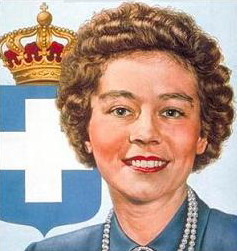 In December the King attempts a counter-coup which fails. He and his family escape to Rome. It is the end of the monarchy in the land of the Hellenes. Perhaps having a King may have been a
good idea
at the beginning of the new Greek state, as a symbolic leader to keep the country together in that first chaotic period. But the Greeks realize that the Kings are and have always been tools of the western powers and are themselves foreigners with not an ounce of Greek blood between them. King Constantine lives in exile and raises a family, hoping to return to Greece one day even as a private citizen, which he eventually does, for the funeral of his mother Queen Frederika, one of the most controversial and out-spoken figures in the history of the Greek monarchy. Of German decent she was at one time photographed in the uniform of the Nazi Youth. Following the abolition of the monarchy in Greece she becomes something of hippy and goes to India to be with her guru Jagadguru Chandrasekarendra Saraswathi Swamigal.
(It's true. Check it out by clicking on her photo.) In December the King attempts a counter-coup which fails. He and his family escape to Rome. It is the end of the monarchy in the land of the Hellenes. Perhaps having a King may have been a
good idea
at the beginning of the new Greek state, as a symbolic leader to keep the country together in that first chaotic period. But the Greeks realize that the Kings are and have always been tools of the western powers and are themselves foreigners with not an ounce of Greek blood between them. King Constantine lives in exile and raises a family, hoping to return to Greece one day even as a private citizen, which he eventually does, for the funeral of his mother Queen Frederika, one of the most controversial and out-spoken figures in the history of the Greek monarchy. Of German decent she was at one time photographed in the uniform of the Nazi Youth. Following the abolition of the monarchy in Greece she becomes something of hippy and goes to India to be with her guru Jagadguru Chandrasekarendra Saraswathi Swamigal.
(It's true. Check it out by clicking on her photo.)
|
|
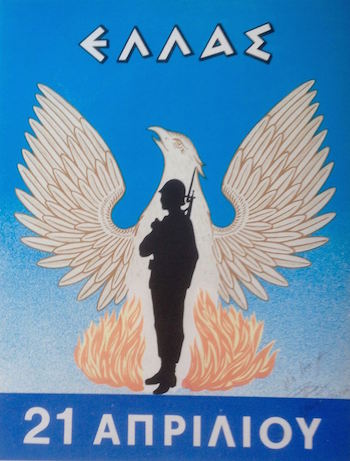 As dictatorships go the Greek Junta is not as brutal as some, unless of course you are a communist or even suspected of being one in which case it is hell on earth. The police and soldiers who do the actual torturing do it with impunity, declaring to their victims that they have the USA and NATO behind them. The list and description
of methods used to
extract information is horrifying and for the most part the information they are trying to get are the names of more people they can torture and get to sign confessions to justify the torture. It is a pointless exercise and more of an excuse for individual cruelty than a plan to get any kind of important information. But despite what is going on behind closed doors at ESA (Hellenic Secret Police), the Junta is putting on a happy face for the foreigners which creates a period of investment and economic
growth
for the country. Greece is now a 'safe environment' for international investors with the threat of communism gone. It is a time of road building and ribbon cutting, when it seems every week either Papadopoulos or Patakos is on the Greek cinema newsreels dedicating a new hospital or clinic, surrounded by an assortment of soldiers in uniform, politicians in suits and bearded priests in their Sunday finest. Some claim that every few decades the Greeks need a Metaxas or a Papadopoulos to bring order
and get everybody moving in the same direction for awhile. With Greece now seen as a 'safe' environment for investors, money starts pouring in at the same time as concrete is poured for thousands of hotels and apartment buildings and the face of Athens begins to change dramatically. Many people make deals with developers, exchanging their family homes for two or three apartments in a four or five story apartment building on the same spot. Gradually the old houses disappear as Athens builds upwards and outwards. As dictatorships go the Greek Junta is not as brutal as some, unless of course you are a communist or even suspected of being one in which case it is hell on earth. The police and soldiers who do the actual torturing do it with impunity, declaring to their victims that they have the USA and NATO behind them. The list and description
of methods used to
extract information is horrifying and for the most part the information they are trying to get are the names of more people they can torture and get to sign confessions to justify the torture. It is a pointless exercise and more of an excuse for individual cruelty than a plan to get any kind of important information. But despite what is going on behind closed doors at ESA (Hellenic Secret Police), the Junta is putting on a happy face for the foreigners which creates a period of investment and economic
growth
for the country. Greece is now a 'safe environment' for international investors with the threat of communism gone. It is a time of road building and ribbon cutting, when it seems every week either Papadopoulos or Patakos is on the Greek cinema newsreels dedicating a new hospital or clinic, surrounded by an assortment of soldiers in uniform, politicians in suits and bearded priests in their Sunday finest. Some claim that every few decades the Greeks need a Metaxas or a Papadopoulos to bring order
and get everybody moving in the same direction for awhile. With Greece now seen as a 'safe' environment for investors, money starts pouring in at the same time as concrete is poured for thousands of hotels and apartment buildings and the face of Athens begins to change dramatically. Many people make deals with developers, exchanging their family homes for two or three apartments in a four or five story apartment building on the same spot. Gradually the old houses disappear as Athens builds upwards and outwards.
The first real sign of violent discontent is a bomb attack on Papadopoulos by Alexandros Panagoulis on the coastal road outside of Athens on August 13th 1968. When the plan fails Panagoulis is captured and imprisoned and for the next five years subjected to physical abuse as well as psychological torture. The most moving protest is the funeral of George Papandreou in November of that same year in which millions of Athenians follow the casket to the cemetery in
defiance of
the dictatorship. There are clashes with the police and 41 people are arrested. In between these two events the United States announces that its aid in heavy arms will continue. In March of 1969 Nobel Prize poet George Seferis issues a public statement against the dictatorship. In August of that year a series of bombings in Psihiko target among others the automobiles of the US Military Attache and other Embassy and military officials. On December 10th Greece withdraws from the Council of Europe to avoid the humiliation
of being expelled.
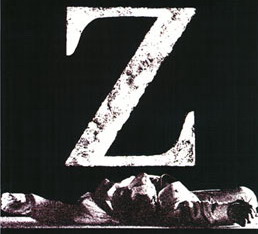 In another major event of 1969 Kosta-Gavras releases his film Z about the assassination of Grigoris Lambrakis. The movie has been filmed in Algeria since it obviously could not be filmed in Greece. It is nominated for a large number of top awards, including an Oscar for Best Picture, winning the Oscar for Best Foreign Film. It also wins the Golden Globe for Best Foreign Language Picture, and is named best picture by the New York Film Critics Circle Awards and National Society of Film Critics Awards
. The film also is nominated for a Golden Palm award at the Cannes film festival. The soundtrack, by Mikis Theodorakis, who is under arrest at the time, becomes a hit record though of course like the film it is banned in Greece. The film ends with a list of things banned by the Junta which include the peace movement, strikes, labor unions, long hair on men, mini-skirts, the peace symbol, the Beatles, Sophocles, Tolstoy, Aeschylus, Socrates, Eugene Ionesco, Sartre, Chekhov, Mark Twain, Samuel Beckett,
free press, new math and the letter Z , which means 'he lives'.
In another major event of 1969 Kosta-Gavras releases his film Z about the assassination of Grigoris Lambrakis. The movie has been filmed in Algeria since it obviously could not be filmed in Greece. It is nominated for a large number of top awards, including an Oscar for Best Picture, winning the Oscar for Best Foreign Film. It also wins the Golden Globe for Best Foreign Language Picture, and is named best picture by the New York Film Critics Circle Awards and National Society of Film Critics Awards
. The film also is nominated for a Golden Palm award at the Cannes film festival. The soundtrack, by Mikis Theodorakis, who is under arrest at the time, becomes a hit record though of course like the film it is banned in Greece. The film ends with a list of things banned by the Junta which include the peace movement, strikes, labor unions, long hair on men, mini-skirts, the peace symbol, the Beatles, Sophocles, Tolstoy, Aeschylus, Socrates, Eugene Ionesco, Sartre, Chekhov, Mark Twain, Samuel Beckett,
free press, new math and the letter Z , which means 'he lives'.
|
|
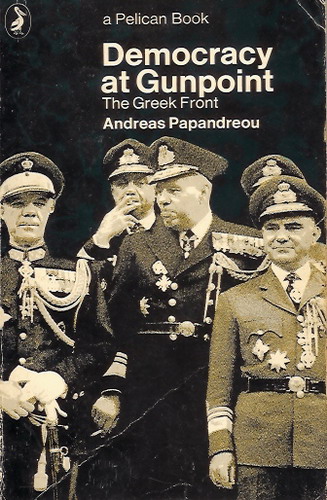 On March 26, 1970 the regime closes the daily newspaper Ethnos.
Greece is accused of violating human rights by the Committee
for Human Rights of the Council of Europe and later that year cancels
its agreement which allowed the International Red Cross to investigate
conditions of political prisoners in Greece. In April Mikis Theodorakis,
who has once again been imprisoned, becomes ill with tuberculosis and
is permitted to leave Greece for France, though his family are forced
to stay behind as hostages. A month later his family escapes Greece
with the help of friends and from this point on Theodorakis becomes
a symbol of the resistance, performing concerts and speaking around
the world. That same year Andreas Papandreou in exile in Ontario,
Canada publishes his book Democracy at Gunpoint which
tells the story of the events that led to the Junta and his experience
at the hands of the dictatorship including the months in solitary
confinement. It is probably the best first-hand account of this
period. In October of 1971
Vice-President Spiro Agnew visits Greece, under heavy security.
Two years later he becomes the first Vice-President to resign due
to criminal charges, which include extortion, tax evasion and bribery.
Two months after his visit the government of Greece announces that
negotiations are taking place to make Athens the home port for the
US 6th Fleet. A year later the agreement is signed. The Nixon-Agnew
election campaign also receives a half a million dollar donation
from the Junta, alleged to have come from the CIA, though a senate
investigation of the donation is cancelled at the request of Henry
Kissinger. On March 26, 1970 the regime closes the daily newspaper Ethnos.
Greece is accused of violating human rights by the Committee
for Human Rights of the Council of Europe and later that year cancels
its agreement which allowed the International Red Cross to investigate
conditions of political prisoners in Greece. In April Mikis Theodorakis,
who has once again been imprisoned, becomes ill with tuberculosis and
is permitted to leave Greece for France, though his family are forced
to stay behind as hostages. A month later his family escapes Greece
with the help of friends and from this point on Theodorakis becomes
a symbol of the resistance, performing concerts and speaking around
the world. That same year Andreas Papandreou in exile in Ontario,
Canada publishes his book Democracy at Gunpoint which
tells the story of the events that led to the Junta and his experience
at the hands of the dictatorship including the months in solitary
confinement. It is probably the best first-hand account of this
period. In October of 1971
Vice-President Spiro Agnew visits Greece, under heavy security.
Two years later he becomes the first Vice-President to resign due
to criminal charges, which include extortion, tax evasion and bribery.
Two months after his visit the government of Greece announces that
negotiations are taking place to make Athens the home port for the
US 6th Fleet. A year later the agreement is signed. The Nixon-Agnew
election campaign also receives a half a million dollar donation
from the Junta, alleged to have come from the CIA, though a senate
investigation of the donation is cancelled at the request of Henry
Kissinger.
|
|
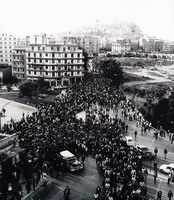 In September of 1972 another great figure dies, this time the
poet George Seferis, considered the most distinguished poet of the
pre-war period, whose poems often reflected a deep sense of the
tragedy of the Greek people and who only a few months previously
had denounced the Junta. Thousands of young people
march with Seferis' coffin to the grave site, turning his funeral into one of the largest mass demonstrations against the
dictatorship. A few months later, in January
of 1973, a number of students are put on trial for having formed
a political party and distributing leaflets. Students at the Polytechnion
(Polytechnical University of Athens) abstain from lessons and the dictatorship passes a law
that any student cutting classes will be drafted into the army.
Students at the law school barricade themselves and ask for the
abolition the oppressive laws. They leave peacefully after being
promised safe passage by the Junta. This promise is broken and the
students are beaten up by the police. In September of 1972 another great figure dies, this time the
poet George Seferis, considered the most distinguished poet of the
pre-war period, whose poems often reflected a deep sense of the
tragedy of the Greek people and who only a few months previously
had denounced the Junta. Thousands of young people
march with Seferis' coffin to the grave site, turning his funeral into one of the largest mass demonstrations against the
dictatorship. A few months later, in January
of 1973, a number of students are put on trial for having formed
a political party and distributing leaflets. Students at the Polytechnion
(Polytechnical University of Athens) abstain from lessons and the dictatorship passes a law
that any student cutting classes will be drafted into the army.
Students at the law school barricade themselves and ask for the
abolition the oppressive laws. They leave peacefully after being
promised safe passage by the Junta. This promise is broken and the
students are beaten up by the police.
|
|
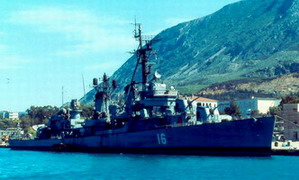 In May of 1973 the Greek Navy attempts to overthrow the dictatorship
and capture the island of Syros. Led by Commander N. Pappas, a veteran
of several aborted attempted counter-coups, the plan
was to begin on May 23rd. But by the 21st of May members of the
group were being arrested and tortured. Commander Pappas with the
agreement of his crew on the destroyer Velos to the astonishment of British, American, Italian, and other naval commanders,
abandoned a NATO exercise and sailed to the fishing port of Fiumicino, Italy, where two officers went ashore and tried to
telephone the exiled king, who was living on the outskirts of Rome. After the
Italians surrounded the ship with police boats, those who wished to defect were granted political
asylum, and the rest sailed back to Greece with the ship. The incident
attracted the attention of the international media. After the fall
of the Junta Commander Pappas was promoted to admiral. In May of 1973 the Greek Navy attempts to overthrow the dictatorship
and capture the island of Syros. Led by Commander N. Pappas, a veteran
of several aborted attempted counter-coups, the plan
was to begin on May 23rd. But by the 21st of May members of the
group were being arrested and tortured. Commander Pappas with the
agreement of his crew on the destroyer Velos to the astonishment of British, American, Italian, and other naval commanders,
abandoned a NATO exercise and sailed to the fishing port of Fiumicino, Italy, where two officers went ashore and tried to
telephone the exiled king, who was living on the outskirts of Rome. After the
Italians surrounded the ship with police boats, those who wished to defect were granted political
asylum, and the rest sailed back to Greece with the ship. The incident
attracted the attention of the international media. After the fall
of the Junta Commander Pappas was promoted to admiral.
|
|
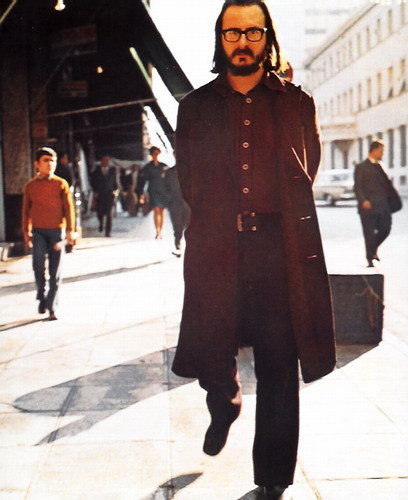 Culturally
the music goes on. Stellios Kazantzides, Stratos Dionysiou,
Marinella, and newcomer George Dalaras are big stars,
making records, playing concerts, and doing the central clubs in
the winter and the outdoor clubs on the coast in the summer. But
there is also a musical revolution going on in the basement clubs
around Platia Victoria and Archanon Streets. The leader of this
movement, though nobody would call it a movement and he probably
would not call himself the leader, is Dionysios Savopoulos, who
has fused traditional Greek music with Zappa-esque rock, Dylan-like
lyrics that evoke nationalism while at the same time poking fun
at the Junta in a language so cryptic it is unlikely they understood the songs were about them. Like Theodorakis, Savopoulos becomes
a hero of the youth. His album Vromeko
Psomi (Dirty Bread) is a classic, a
thinly veiled attack on the dictatorship, that if they heard it, must
have had the colonels wringing their hands wondering what to do
with this guy. Eventually he is charged with plagiarism and imprisoned
though by now he is an icon. Savopoulos spends a winter playing at the rock club Kitaron where he re-introduces the youth of Athens to the music of Sotira Bellou, the aging rembetika singer, who opens his shows, as well as the Karagiozis- shadow puppet theater which tells the unwritten history of the Greek people trying to conform to
the
laws, customs, values, fashions and politics of Western Europe that had been imposed upon them by the countries that helped liberate them from the Turks. Culturally
the music goes on. Stellios Kazantzides, Stratos Dionysiou,
Marinella, and newcomer George Dalaras are big stars,
making records, playing concerts, and doing the central clubs in
the winter and the outdoor clubs on the coast in the summer. But
there is also a musical revolution going on in the basement clubs
around Platia Victoria and Archanon Streets. The leader of this
movement, though nobody would call it a movement and he probably
would not call himself the leader, is Dionysios Savopoulos, who
has fused traditional Greek music with Zappa-esque rock, Dylan-like
lyrics that evoke nationalism while at the same time poking fun
at the Junta in a language so cryptic it is unlikely they understood the songs were about them. Like Theodorakis, Savopoulos becomes
a hero of the youth. His album Vromeko
Psomi (Dirty Bread) is a classic, a
thinly veiled attack on the dictatorship, that if they heard it, must
have had the colonels wringing their hands wondering what to do
with this guy. Eventually he is charged with plagiarism and imprisoned
though by now he is an icon. Savopoulos spends a winter playing at the rock club Kitaron where he re-introduces the youth of Athens to the music of Sotira Bellou, the aging rembetika singer, who opens his shows, as well as the Karagiozis- shadow puppet theater which tells the unwritten history of the Greek people trying to conform to
the
laws, customs, values, fashions and politics of Western Europe that had been imposed upon them by the countries that helped liberate them from the Turks.
|
|
 There
had always been rock music in Greece. From the time of the Beatles,
groups like the Idols and the Charms played British-American
sounding beat or garage pop with a Greek accent. The most popular
of these groups, and probably the best, were Aphrodite's
Child, led by keyboard player Vangelis Papathanasiou and bass-playing
vocalist Demis Roussos, who moved to France during the dictatorship and
become well-known with a number of big European hits.
Vangelis is a sort of Greek Brian Wilson, a keyboard wizard with
a great ear for melody and a desire to produce great music
rather than just be a performing pop-star. In 1970 he and Kostas
Ferris create the concept album 666, which becomes the group's final
release. The album which is supposedly based on The Book of Revelation
is considered one of the best, most innovative and diverse progressive rock albums of all
time. However, by the time the record company, who are disturbed by the cover
and the material, finally release it Aphrodite's Child no longer exists.
The most controversial song on the album is titled with the infinity
symbol and features Irini Pappas apparently having an orgasm while
doing a mantra-like chant on top of Vangeliesque sound effects.
One would assume that this is what kept the record company from
embracing the project whole-heartedly. In fact the record company
asks Vangelis to remove this song and he refuses. The album becomes
a cult classic and the note that it has been recorded under the
influence of Sahlep, leads people to believe it is some kind
of drug induced fantasy album.
But Sahlep is the therapeutic drink sold in the winter by street
venders in Athens made from a mountain orchid. There
had always been rock music in Greece. From the time of the Beatles,
groups like the Idols and the Charms played British-American
sounding beat or garage pop with a Greek accent. The most popular
of these groups, and probably the best, were Aphrodite's
Child, led by keyboard player Vangelis Papathanasiou and bass-playing
vocalist Demis Roussos, who moved to France during the dictatorship and
become well-known with a number of big European hits.
Vangelis is a sort of Greek Brian Wilson, a keyboard wizard with
a great ear for melody and a desire to produce great music
rather than just be a performing pop-star. In 1970 he and Kostas
Ferris create the concept album 666, which becomes the group's final
release. The album which is supposedly based on The Book of Revelation
is considered one of the best, most innovative and diverse progressive rock albums of all
time. However, by the time the record company, who are disturbed by the cover
and the material, finally release it Aphrodite's Child no longer exists.
The most controversial song on the album is titled with the infinity
symbol and features Irini Pappas apparently having an orgasm while
doing a mantra-like chant on top of Vangeliesque sound effects.
One would assume that this is what kept the record company from
embracing the project whole-heartedly. In fact the record company
asks Vangelis to remove this song and he refuses. The album becomes
a cult classic and the note that it has been recorded under the
influence of Sahlep, leads people to believe it is some kind
of drug induced fantasy album.
But Sahlep is the therapeutic drink sold in the winter by street
venders in Athens made from a mountain orchid.
|
|
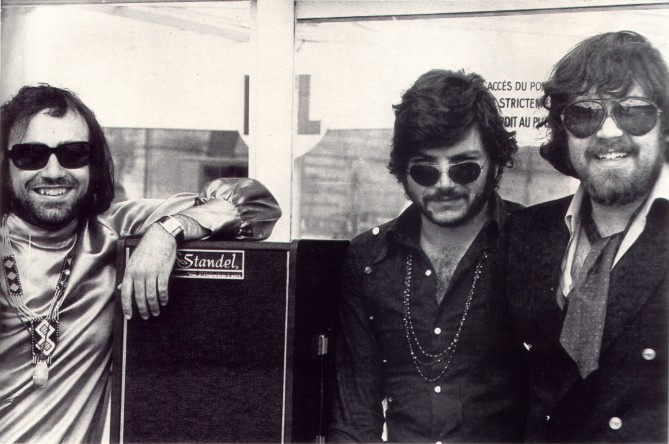
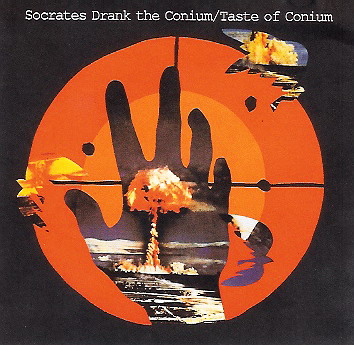 Among the bands that decides to stay in
Greece and play, or more likely are unable to leave because
of military obligations, (which in Greece means if you are 19 and
not in school you go, and if you are in school you go when you are
finished), are groups like MGC
who play hard rock, mostly covers, Bouboulia, Pelomabeque
and Morka,
the last group led by Greek-American Dorian Kokas. Exedaktilo
is an R&B Rolling Stones type band with 2 excellent guitar
players, who play at the Kittaro Club
with the three-piece group Socrates
Drunk The Conium, the best of the
bunch, a Hendrix-style blues band with great original
material and an incredible guitar player by the name of Yannis Spathas. The bands would each play in a club, 5 or 6 nights a week, for the entire season which started in late September and ended sometime in May. Playing down the street from Kittaro in the Elatirion
Club was Poll,
led by Kostas Tournas, Robert Williams
and Stavros Logarides,
a hippy-folk-rock band similar to Crosby-Stills-Nash and Young,
who were the closest thing to Beatlemania with screaming girls attending their concerts which were held mostly on Saturday and Sunday afternoons in cinemas. Their importance in Greek
cultural history was that they were singing and playing original
rock music in Greek, which had been done before but not successfully.
Unlike French, the Greek language goes well with rock music. Among the bands that decides to stay in
Greece and play, or more likely are unable to leave because
of military obligations, (which in Greece means if you are 19 and
not in school you go, and if you are in school you go when you are
finished), are groups like MGC
who play hard rock, mostly covers, Bouboulia, Pelomabeque
and Morka,
the last group led by Greek-American Dorian Kokas. Exedaktilo
is an R&B Rolling Stones type band with 2 excellent guitar
players, who play at the Kittaro Club
with the three-piece group Socrates
Drunk The Conium, the best of the
bunch, a Hendrix-style blues band with great original
material and an incredible guitar player by the name of Yannis Spathas. The bands would each play in a club, 5 or 6 nights a week, for the entire season which started in late September and ended sometime in May. Playing down the street from Kittaro in the Elatirion
Club was Poll,
led by Kostas Tournas, Robert Williams
and Stavros Logarides,
a hippy-folk-rock band similar to Crosby-Stills-Nash and Young,
who were the closest thing to Beatlemania with screaming girls attending their concerts which were held mostly on Saturday and Sunday afternoons in cinemas. Their importance in Greek
cultural history was that they were singing and playing original
rock music in Greek, which had been done before but not successfully.
Unlike French, the Greek language goes well with rock music.
|
|
 The reason I mention these bands and the underground
club scene is because at the time this music was the primary opposition
to the Junta within Greece. Kids are growing their hair,
smoking hashish and listening to western music coming into the country
through the US Military Radio station AFRS, and the huge number
of small clandestine radio stations. In 1971 the movie Woodstock
is shown in Athens, causing near riots. For young people it is one
of the most exciting events of the period and when the recently deceased Jimi Hendrix
appears on the screen the glow of a thousand bic-lighters and
candles fills the theater. The youth of Greece see there
seems to be a world of peace, love and music outside and
their country is a prison in comparison. The colonels want
to keep western pop-culture out of Greece and keep the youth isolated so
they might fully embrace their Hellenic-Christian values. Their
police raid the clubs, taking away long-haired young men, cutting
their hair and sending them to do their military service. But the
junta find it
is impossible to keep the spirit of young people bottled up. In June of 1973 Papadopoulos calls a referendum on the monarchy and
the establishment of a parliamentary republic, granting amnesty to many political
prisoners, including Alexander Panagoulis, the man who had tried to assassinate
him. He appoints himself president, forming a government with veteran
politician Spyros Markezinis to lead the country toward elections. The junta
seemed to be liberalizing itself though it cannot convince the youth who
are becoming more outspoken. It is obvious that the plan is for the elections
to legalize the dictatorship. In November students begin to gather at the Athens Polytechnic
following protests and clashes with police at a memorial service
for George Papandreou. From this point on for the youth of
Greece it is simple: The government is the enemy and this is war. The reason I mention these bands and the underground
club scene is because at the time this music was the primary opposition
to the Junta within Greece. Kids are growing their hair,
smoking hashish and listening to western music coming into the country
through the US Military Radio station AFRS, and the huge number
of small clandestine radio stations. In 1971 the movie Woodstock
is shown in Athens, causing near riots. For young people it is one
of the most exciting events of the period and when the recently deceased Jimi Hendrix
appears on the screen the glow of a thousand bic-lighters and
candles fills the theater. The youth of Greece see there
seems to be a world of peace, love and music outside and
their country is a prison in comparison. The colonels want
to keep western pop-culture out of Greece and keep the youth isolated so
they might fully embrace their Hellenic-Christian values. Their
police raid the clubs, taking away long-haired young men, cutting
their hair and sending them to do their military service. But the
junta find it
is impossible to keep the spirit of young people bottled up. In June of 1973 Papadopoulos calls a referendum on the monarchy and
the establishment of a parliamentary republic, granting amnesty to many political
prisoners, including Alexander Panagoulis, the man who had tried to assassinate
him. He appoints himself president, forming a government with veteran
politician Spyros Markezinis to lead the country toward elections. The junta
seemed to be liberalizing itself though it cannot convince the youth who
are becoming more outspoken. It is obvious that the plan is for the elections
to legalize the dictatorship. In November students begin to gather at the Athens Polytechnic
following protests and clashes with police at a memorial service
for George Papandreou. From this point on for the youth of
Greece it is simple: The government is the enemy and this is war.
|
|