|
The resurrection of Constantine Karamanlis, and the rise of Andreas Papandreou, PASOK, New Democracy, Savopoulos, Nick Galis and Greek Basketball
|
|
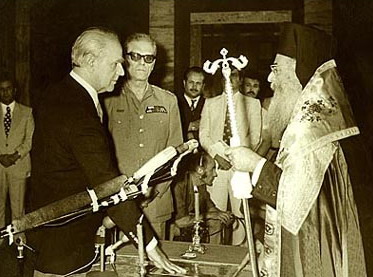 The first of Constantine Karamanlis' actions after assuming power is to form a government of national unity with members of all the parties
except
for the left. He arrests junta members,
disbands the Military Police (ESA) and puts their torturers in jail while freeing all political prisoners, declaring amnesty for all political crimes and legalizing the communist party. In October he dissolves his ERE party and forms the New Democracy party, leading them to victory in November elections, one year after the student demonstrations that had been the beginning of the end for the dictatorship. In December a national referendum is held that gets rid of the monarchy officially once
and for all. Two years after the fall of the Junta, Andreas Papandreou returns and forms PASOK (Pan Hellenic Socialist Party) which quickly gains popularity, virtually doubling their support with each election. In 1975 the televised trials of the members of the Junta take place with Papadopoulos, Pattakos and Markarezos all
receiving death sentences which are quickly commuted to
life in prison. The leader of the second junta and the secret police Ioannides receives life too. In the meantime relations with Turkey are at an all-time low following the 1974 invasion of Cyprus. The island remains divided with Archbishop Makarios back as the President of the Greek-Cypriots until his death in
1977 of a heart attack.
When the Turkish survey ship Sismik I sails
into disputed waters to search for oil Papandreou calls on Karamanlis' government to sink it, probably not the best way to handle the incident, actually the worst, but he may not have seriously meant it. In the meantime the tension between Greece and Turkey is playing right into the hands of the US arms dealers as each country is forced to keep up with purchases by the other. The most important foreign policy move which has the biggest impact on Greek domestic life comes in May of 1979 when Greece
signs the treaty that will make the country a full member in the European Community, beginning in January 1981. The first of Constantine Karamanlis' actions after assuming power is to form a government of national unity with members of all the parties
except
for the left. He arrests junta members,
disbands the Military Police (ESA) and puts their torturers in jail while freeing all political prisoners, declaring amnesty for all political crimes and legalizing the communist party. In October he dissolves his ERE party and forms the New Democracy party, leading them to victory in November elections, one year after the student demonstrations that had been the beginning of the end for the dictatorship. In December a national referendum is held that gets rid of the monarchy officially once
and for all. Two years after the fall of the Junta, Andreas Papandreou returns and forms PASOK (Pan Hellenic Socialist Party) which quickly gains popularity, virtually doubling their support with each election. In 1975 the televised trials of the members of the Junta take place with Papadopoulos, Pattakos and Markarezos all
receiving death sentences which are quickly commuted to
life in prison. The leader of the second junta and the secret police Ioannides receives life too. In the meantime relations with Turkey are at an all-time low following the 1974 invasion of Cyprus. The island remains divided with Archbishop Makarios back as the President of the Greek-Cypriots until his death in
1977 of a heart attack.
When the Turkish survey ship Sismik I sails
into disputed waters to search for oil Papandreou calls on Karamanlis' government to sink it, probably not the best way to handle the incident, actually the worst, but he may not have seriously meant it. In the meantime the tension between Greece and Turkey is playing right into the hands of the US arms dealers as each country is forced to keep up with purchases by the other. The most important foreign policy move which has the biggest impact on Greek domestic life comes in May of 1979 when Greece
signs the treaty that will make the country a full member in the European Community, beginning in January 1981.
|
|
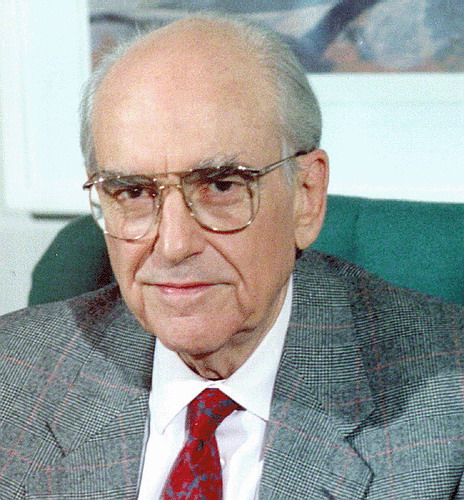 Realizing that PASOK is destined to be the ruling party more sooner than later, Karamanlis had changed the constitution to give the president more power. Then he runs for that
office and
is elected president in 1980.
When Papandreou wins the election for Prime Minister in 1981, the two popular and charismatic leaders share power and despite the personal and political differences between the two men, things go fairly well. Ties are improved between Greece and the Third World as well as the US which still mistrusts Papandreou. The Papandreou government in a policy of National Reconciliation gives compensation to the resistance fighters who had fought against
the
Nazis and the government in the Civil War and allows those who had gone into exile in the eastern block countries to return. He promotes equal rights for women and passes laws that make life easier for farmers and workers. He also enforces the ban on plate-smashing in tavernas which had originally been outlawed by the Junta but not enforced.
Civil marriage though vigorously opposed by the church is introduced and so is divorce, while adultery is de-criminalized. A national health service is introduced and clinics and hospitals are built in rural areas which increase PASOK's support in the countryside. Though Papandreou had been against Greece's entry to the EU, in reality the agricultural subsidies received by the farmers are an economic boost to the rural population that serve to make PASOK more popular. Papandreou calls for a nuclear-free
Balkan peninsula and urges NATO to delay plans to put cruise and Pershing missiles in Europe. Papandreou is pro-Sandinista, pro-Allende and a supporter of Yasser Arafat's PLO. In 1988 the agreement for the US military bases in Greece expires and from this point on the American military presence in Greece diminishes. The large Air Force base at Hellenikon, home to the 7206th Support Group closes, leaving behind a few metal huts and a softball field which becomes home to the Greek baseball and softball
leagues founded by Tom Mazarakis in the nineties. Realizing that PASOK is destined to be the ruling party more sooner than later, Karamanlis had changed the constitution to give the president more power. Then he runs for that
office and
is elected president in 1980.
When Papandreou wins the election for Prime Minister in 1981, the two popular and charismatic leaders share power and despite the personal and political differences between the two men, things go fairly well. Ties are improved between Greece and the Third World as well as the US which still mistrusts Papandreou. The Papandreou government in a policy of National Reconciliation gives compensation to the resistance fighters who had fought against
the
Nazis and the government in the Civil War and allows those who had gone into exile in the eastern block countries to return. He promotes equal rights for women and passes laws that make life easier for farmers and workers. He also enforces the ban on plate-smashing in tavernas which had originally been outlawed by the Junta but not enforced.
Civil marriage though vigorously opposed by the church is introduced and so is divorce, while adultery is de-criminalized. A national health service is introduced and clinics and hospitals are built in rural areas which increase PASOK's support in the countryside. Though Papandreou had been against Greece's entry to the EU, in reality the agricultural subsidies received by the farmers are an economic boost to the rural population that serve to make PASOK more popular. Papandreou calls for a nuclear-free
Balkan peninsula and urges NATO to delay plans to put cruise and Pershing missiles in Europe. Papandreou is pro-Sandinista, pro-Allende and a supporter of Yasser Arafat's PLO. In 1988 the agreement for the US military bases in Greece expires and from this point on the American military presence in Greece diminishes. The large Air Force base at Hellenikon, home to the 7206th Support Group closes, leaving behind a few metal huts and a softball field which becomes home to the Greek baseball and softball
leagues founded by Tom Mazarakis in the nineties.
|
|
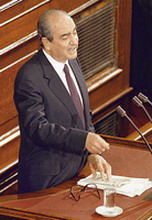 In 1984 Constantine Mitsotakis,
a former member of George Papandreou's Center Union and one of the Apostates who had defected and caused the fall of that government in the sixties, is chosen to lead New Democracy. This is to awaken a bitter rivalry between he and Andreas Papandreou who views Mitsotakis as a traitor and a cause in the series of events which had led to the dictatorship. That being said, Mitsotakis is more of a centrist than a right-winger, in the liberal style of
his uncle Eleftherios Venizelos. In 1985 Papandreou withdraws support for Karmanlis
as president while at the same time transferring much of the power of that offices to himself. Supreme Court Judge Christos Sartzetakis who had been the prosecutor in the Lambrakis murder (and the hero of the movie Z) is elected president. Papandreou softens his anti-American stance, improving relations with them and with NATO. PASOK win their second term with a smaller margin but some changes to the electoral law by Papandreou assure that even with a smaller margin of victory, and without a majority of
the votes they still have a working majority in the parliament. In 1984 Constantine Mitsotakis,
a former member of George Papandreou's Center Union and one of the Apostates who had defected and caused the fall of that government in the sixties, is chosen to lead New Democracy. This is to awaken a bitter rivalry between he and Andreas Papandreou who views Mitsotakis as a traitor and a cause in the series of events which had led to the dictatorship. That being said, Mitsotakis is more of a centrist than a right-winger, in the liberal style of
his uncle Eleftherios Venizelos. In 1985 Papandreou withdraws support for Karmanlis
as president while at the same time transferring much of the power of that offices to himself. Supreme Court Judge Christos Sartzetakis who had been the prosecutor in the Lambrakis murder (and the hero of the movie Z) is elected president. Papandreou softens his anti-American stance, improving relations with them and with NATO. PASOK win their second term with a smaller margin but some changes to the electoral law by Papandreou assure that even with a smaller margin of victory, and without a majority of
the votes they still have a working majority in the parliament.
|
|
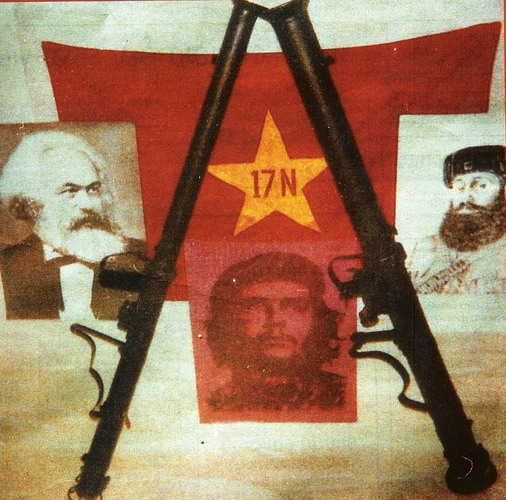 In 1976 Alexander Panagoulis, the man who had attempted to assassinate George Papadopoulos and was later elected to parliament, is killed by political enemies in
an ambush
made to look like an auto accident.
Within months of his death, Oriana Fallaci begins work on the book she would dedicate to him, her most important work, A Man. This period is also the beginning of the exploits of the terrorist group November 17th. Their first murder is of the CIA Station chief Richard Welch in 1975.
They remain the most elusive and successful terrorist group in Europe through
the eighties and nineties killing over two dozen CIA agents, diplomats, businessmen and policemen, including Pavlos Bakoyiannis, the son-in-law of Constantine Mitsotakis and husband of Dora who later becomes mayor of Athens. One of the most tragic of November 17's victims is Armenian Thanos Axarlian who on July 14th 1992 is killed
when an attack
on the Greek Finance minister fails. The rocket ricochets
off the armored car and hits a building, collapsing part of it, killing Axarlian. The sad irony is that he had been a university student in Sarajevo who had come to Athens to escape the war. (There is a shrine to him across the street from the Hotel Astor near Syntagma Square) In 1976 Alexander Panagoulis, the man who had attempted to assassinate George Papadopoulos and was later elected to parliament, is killed by political enemies in
an ambush
made to look like an auto accident.
Within months of his death, Oriana Fallaci begins work on the book she would dedicate to him, her most important work, A Man. This period is also the beginning of the exploits of the terrorist group November 17th. Their first murder is of the CIA Station chief Richard Welch in 1975.
They remain the most elusive and successful terrorist group in Europe through
the eighties and nineties killing over two dozen CIA agents, diplomats, businessmen and policemen, including Pavlos Bakoyiannis, the son-in-law of Constantine Mitsotakis and husband of Dora who later becomes mayor of Athens. One of the most tragic of November 17's victims is Armenian Thanos Axarlian who on July 14th 1992 is killed
when an attack
on the Greek Finance minister fails. The rocket ricochets
off the armored car and hits a building, collapsing part of it, killing Axarlian. The sad irony is that he had been a university student in Sarajevo who had come to Athens to escape the war. (There is a shrine to him across the street from the Hotel Astor near Syntagma Square)
|
|
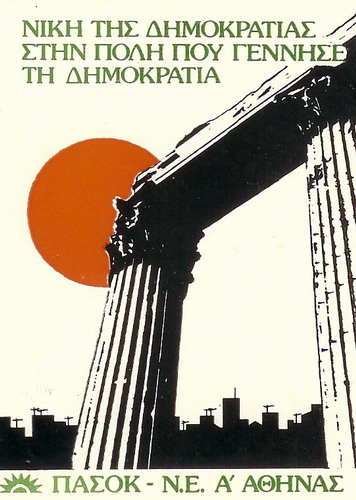 In 1988 a No-War agreement is signed at Davos between Greece and Turkey with the creation of a hot-line between the leaders of the two countries. This leads to a lifting of restrictions in Turkey
against
Greek property owners and an increase
in Greek visitors, though before long tensions arise again. This same year a massive fraud and embezzlement scandal involving the Bank of Crete and allegedly members of parliament including Papandreou shake the country. This is known as the Koskotas Scandal, named for the Greek-American financier who was able to buy the bank of Crete, using the bank's own money. (You can try this. Go to a bank and tell them you want to buy it. If they agree ask if you can pay them after they give you the bank. If they agree,
take the money from your new bank and pay them.) Along with this and a phone-tapping scandal and the appearance that members of the government are enriching themselves while calling for austerity from the people, contributes to a loss in popularity for PASOK. Most of PASOK's support comes from the countryside and working class areas of the city but by now even some of these people are losing their enthusiasm for Papandreou. The 1990 campaign is one of numerous political rallies by all parties attended
by millions. New Democracy rallies include ex Poll pop-star Robert Williams and his band doing concerts which end with the theme song for the party with its refrain "Long live Greece, long live Religion, long live New Democracy". Party rallies include showing the film Eleni from Nicholas Gage's book of the same name, about communist atrocities in northern Greece during the civil war. Meanwhile the PASOK rallies appear just as large though they are accused of bussing in paid Yugoslavians
and giving them blue and white Greek flags and green PASOK flags and telling them to cheer wildly. A story circulates of one woman who is watching a rally on television and to her shock sees her dead husband cheering in the front row. Supposedly they had used film footage of a well attended PASOK rally from four years before. In 1988 a No-War agreement is signed at Davos between Greece and Turkey with the creation of a hot-line between the leaders of the two countries. This leads to a lifting of restrictions in Turkey
against
Greek property owners and an increase
in Greek visitors, though before long tensions arise again. This same year a massive fraud and embezzlement scandal involving the Bank of Crete and allegedly members of parliament including Papandreou shake the country. This is known as the Koskotas Scandal, named for the Greek-American financier who was able to buy the bank of Crete, using the bank's own money. (You can try this. Go to a bank and tell them you want to buy it. If they agree ask if you can pay them after they give you the bank. If they agree,
take the money from your new bank and pay them.) Along with this and a phone-tapping scandal and the appearance that members of the government are enriching themselves while calling for austerity from the people, contributes to a loss in popularity for PASOK. Most of PASOK's support comes from the countryside and working class areas of the city but by now even some of these people are losing their enthusiasm for Papandreou. The 1990 campaign is one of numerous political rallies by all parties attended
by millions. New Democracy rallies include ex Poll pop-star Robert Williams and his band doing concerts which end with the theme song for the party with its refrain "Long live Greece, long live Religion, long live New Democracy". Party rallies include showing the film Eleni from Nicholas Gage's book of the same name, about communist atrocities in northern Greece during the civil war. Meanwhile the PASOK rallies appear just as large though they are accused of bussing in paid Yugoslavians
and giving them blue and white Greek flags and green PASOK flags and telling them to cheer wildly. A story circulates of one woman who is watching a rally on television and to her shock sees her dead husband cheering in the front row. Supposedly they had used film footage of a well attended PASOK rally from four years before.
|
|
 Mitsotakis' conservative New Democracy party wins the elections though without a majority. New elections are called for April in which they win a very slim
majority.
Constantine Karamanlis is again
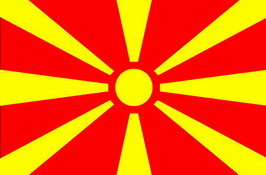
elected president and the country begins a period of austerity and the selling off of public companies which leads to strikes by workers. In 1992 the breakup of Yugoslavia creates an identity problem for the former Yugoslavian Republic of Macedonia. Greece feels that by allowing them to call themselves Macedonia, they might one day dispute the territory of northern Greece which is also called Macedonia. For the time being the country agrees to call
itself
FYROM (Former Yugoslavian Republic of Macedonia) until some better name can be thought up that will satisfy both countries. But in the meantime ND's foreign minister Antonis Samaras, leaves the party over a disagreement in the handling of the issue and starts his own party called Political Spring. This means that ND no longer has a majority and has to call new elections on Oct. 10 1993, which Papandreou, wins. Two years later on January 15th 1996
an ailing
Papandreou resigns as prime minister and is replaced by Kostas Simitis, an economist and former minister of industry. Papandreou dies on June 23, 1996. Two years later Constantine Karmanlis passes away and an era comes to an end. Mitsotakis' conservative New Democracy party wins the elections though without a majority. New elections are called for April in which they win a very slim
majority.
Constantine Karamanlis is again
elected president and the country begins a period of austerity and the selling off of public companies which leads to strikes by workers. In 1992 the breakup of Yugoslavia creates an identity problem for the former Yugoslavian Republic of Macedonia. Greece feels that by allowing them to call themselves Macedonia, they might one day dispute the territory of northern Greece which is also called Macedonia. For the time being the country agrees to call
itself
FYROM (Former Yugoslavian Republic of Macedonia) until some better name can be thought up that will satisfy both countries. But in the meantime ND's foreign minister Antonis Samaras, leaves the party over a disagreement in the handling of the issue and starts his own party called Political Spring. This means that ND no longer has a majority and has to call new elections on Oct. 10 1993, which Papandreou, wins. Two years later on January 15th 1996
an ailing
Papandreou resigns as prime minister and is replaced by Kostas Simitis, an economist and former minister of industry. Papandreou dies on June 23, 1996. Two years later Constantine Karmanlis passes away and an era comes to an end.
|
|
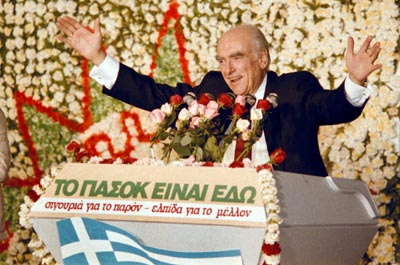 This period from the end of the Junta to the deaths of Papandreou and Karamanlis are really the first time in Greek history that a true democracy has been permitted to flourish. Papandreou was realistic
enough
to know that to actually be anti-American
is not a wise stance in a world that is controlled by the Americans. But he still was able to convince his fellow Greeks that by playing his cards right he could deal with the Americans as an equal and not as a servant, as many governments of the past had. If Karmanlis believed that Greece belonged to the west, then Papandreou believed that Greece belonged to the Greeks but were open to partner with anyone who was willing to work together as equals and not in exploitive relationships. The fortunate
thing is that in this period after the Junta when Greece finally became master of its own destiny there were two strong, intelligent and very human men who shared the responsibility of creating a nation. One only needs to look at Iraq and see how badly things can go following the fall of tyranny. There are those who hated Papandreou and viewed him as a corrupt demagogue, and there were those who loved him and believed he was a hero of the working class. There were those who loved and hated Karamanlis
too. But no matter how passionate you felt either way and regardless of mistakes they may have made these men were two of the most capable and important leaders in the history of Greece. If they abused power as has been alleged, particularly about Papandreou, well that is just the world we live in. There are no saints in politics. Especially in Greek politics. Just as in the USA the road to power is long and no matter how pure you are when you begin you pick up a lot of bad habits on the way. Politics
is by nature corrupt and it takes a special type of person to rise above that corruption. Those that do may not last long since they make everyone else look bad. This period from the end of the Junta to the deaths of Papandreou and Karamanlis are really the first time in Greek history that a true democracy has been permitted to flourish. Papandreou was realistic
enough
to know that to actually be anti-American
is not a wise stance in a world that is controlled by the Americans. But he still was able to convince his fellow Greeks that by playing his cards right he could deal with the Americans as an equal and not as a servant, as many governments of the past had. If Karmanlis believed that Greece belonged to the west, then Papandreou believed that Greece belonged to the Greeks but were open to partner with anyone who was willing to work together as equals and not in exploitive relationships. The fortunate
thing is that in this period after the Junta when Greece finally became master of its own destiny there were two strong, intelligent and very human men who shared the responsibility of creating a nation. One only needs to look at Iraq and see how badly things can go following the fall of tyranny. There are those who hated Papandreou and viewed him as a corrupt demagogue, and there were those who loved him and believed he was a hero of the working class. There were those who loved and hated Karamanlis
too. But no matter how passionate you felt either way and regardless of mistakes they may have made these men were two of the most capable and important leaders in the history of Greece. If they abused power as has been alleged, particularly about Papandreou, well that is just the world we live in. There are no saints in politics. Especially in Greek politics. Just as in the USA the road to power is long and no matter how pure you are when you begin you pick up a lot of bad habits on the way. Politics
is by nature corrupt and it takes a special type of person to rise above that corruption. Those that do may not last long since they make everyone else look bad.
|
|
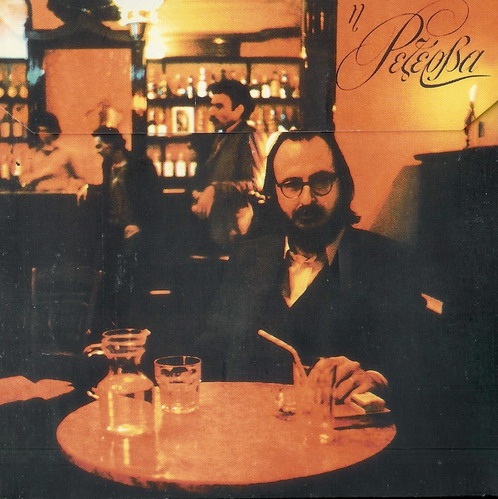 The music in Greece of the seventies
and eighties is some of the most memorable. In the final days of
the Junta, ex-Poll member
Kosta Tournas is going through his David Bowie Michanito
Chrono phase, while fellow band-mate Stavro Logarides has put together a keyboards-bass-drum
group, a sort of Spartan Emerson Lake and Palmer. Dorian
Kokas has a new band called Fos (Light), playing at the Elaterion
club still but now headlining. Their act features an escaped Gorilla
from the zoo who declares to the audience that he is free but are
they?
Socrates goes to England and return to Greece again with a new sound,
and a new producer and part-time keyboard player, Vangelis
Papathanasiou. Former CC Bluesking member Yanni Vavoura
has brought punk to Greece with the Vavoura Band. In 1979 Savopoulos puts out perhaps his
most ambitious and maybe his best album the 4-sided Reserva,
a mixtures of love ballads and social-political anthems. His following
album Trapezakia Exo which comes out in 1983 is a mixtures
of traditional Greek and western pop and is considered by many to
be his last great album, though he still puts out more records every
few years or so. In Laika these two decades are perhaps the
golden era or the last period of the truly great singers, including
Stratos Dionysiou, a former tailor from northern Greece,
with a voice that can melt hearts. He has a string of hits that
continue until his death in 1990. Along with Stellios Kazantzides
and Stamatis Kokkotas his voice is perhaps the most
recognizable of the age. The music in Greece of the seventies
and eighties is some of the most memorable. In the final days of
the Junta, ex-Poll member
Kosta Tournas is going through his David Bowie Michanito
Chrono phase, while fellow band-mate Stavro Logarides has put together a keyboards-bass-drum
group, a sort of Spartan Emerson Lake and Palmer. Dorian
Kokas has a new band called Fos (Light), playing at the Elaterion
club still but now headlining. Their act features an escaped Gorilla
from the zoo who declares to the audience that he is free but are
they?
Socrates goes to England and return to Greece again with a new sound,
and a new producer and part-time keyboard player, Vangelis
Papathanasiou. Former CC Bluesking member Yanni Vavoura
has brought punk to Greece with the Vavoura Band. In 1979 Savopoulos puts out perhaps his
most ambitious and maybe his best album the 4-sided Reserva,
a mixtures of love ballads and social-political anthems. His following
album Trapezakia Exo which comes out in 1983 is a mixtures
of traditional Greek and western pop and is considered by many to
be his last great album, though he still puts out more records every
few years or so. In Laika these two decades are perhaps the
golden era or the last period of the truly great singers, including
Stratos Dionysiou, a former tailor from northern Greece,
with a voice that can melt hearts. He has a string of hits that
continue until his death in 1990. Along with Stellios Kazantzides
and Stamatis Kokkotas his voice is perhaps the most
recognizable of the age.
|
|
 The seventies and eighties also see the
rise of George Dalaras who becomes Greece's biggest
international star, literally an ambassador of Greek music, and
Haris Alexiou, perhaps his female counterpart, as is
Glykeria. Just as the ancient Greeks were known for their
beautiful singing during the Roman age, these singers are blessed
with amazing voices and songwriters who provide them with memorable
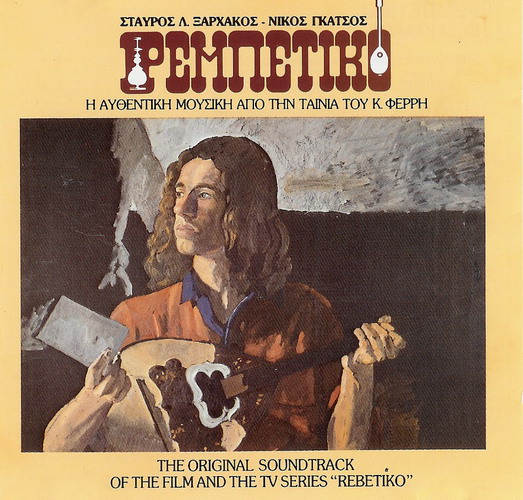
material. The biggest musical event however is a film. Kosta Ferris'
Rembetiko, released in 1983 becomes the most popular Greek
film worldwide. The movie follows the life of a rembetika singer,
based on Marika Ninou, from 1917 to the late fifties. The
soundtrack by Stavros Xarxakos and Nikos Gkatsos also
becomes a best seller and songs from it become part of the sets
of many of the nea-rembetka groups that play in Athens, Thessaloniki
and all over Greece and the Greek communities around the world. Another musical event that is not really a
musical event is the return of Mikis Theodorakis to politics twice
as a member of parliament and once as a minister. He continues to
give concerts in Greece and around the world promoting peace
between Greece and Turkey and for Amnesty International, solar energy
and other important causes. The seventies and eighties also see the
rise of George Dalaras who becomes Greece's biggest
international star, literally an ambassador of Greek music, and
Haris Alexiou, perhaps his female counterpart, as is
Glykeria. Just as the ancient Greeks were known for their
beautiful singing during the Roman age, these singers are blessed
with amazing voices and songwriters who provide them with memorable
material. The biggest musical event however is a film. Kosta Ferris'
Rembetiko, released in 1983 becomes the most popular Greek
film worldwide. The movie follows the life of a rembetika singer,
based on Marika Ninou, from 1917 to the late fifties. The
soundtrack by Stavros Xarxakos and Nikos Gkatsos also
becomes a best seller and songs from it become part of the sets
of many of the nea-rembetka groups that play in Athens, Thessaloniki
and all over Greece and the Greek communities around the world. Another musical event that is not really a
musical event is the return of Mikis Theodorakis to politics twice
as a member of parliament and once as a minister. He continues to
give concerts in Greece and around the world promoting peace
between Greece and Turkey and for Amnesty International, solar energy
and other important causes.
|
|
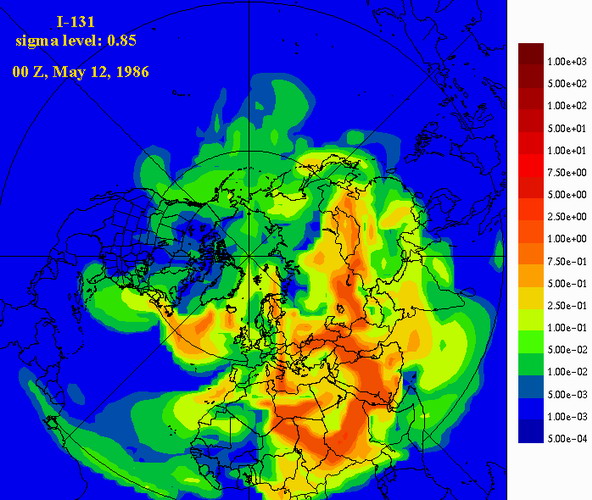 In
1986 an event outside of Greece causes great anxiety within the
country. The nuclear power plant at Chernobyl explodes sending
a cloud of radioactivity around the globe and health threatening
levels of radioactive materials are found in at least twenty nations causing
much concern in Greece. (The night the nuclear Chernobyl cloud passes
over the country it rains heavily.) The journal Nature reports that in Greece, 2,800 kilometers from Chernobyl,
where radiation exposures were far lower than in areas close to the reactor,
leukemia has been diagnosed at rates 2.6 times the norm in young people who were
in the womb when the reactor exploded. The extent of Chernobyl's radioactive, biological and ecological damage, and psychological and economic devastation
around the world are incalculable. In Greece they have gotten a
taste of the terror of a nuclear world. Scientists expect 50
to 100 deaths from cancer during the next 50 years in
Greece because of Chernobyl. The radioactivity disappears after 50 to 100 years, but after
the first year, its level diminishes considerably. Nonetheless this is of little
consolation if you are one of the 50 to 100 who die. For the rest of
us it is a warning and proof of what a small planet we live
on. While Anti-nuclear sentiment increases all over world, Greece
takes a big step when it decides against developing nuclear power. In
1986 an event outside of Greece causes great anxiety within the
country. The nuclear power plant at Chernobyl explodes sending
a cloud of radioactivity around the globe and health threatening
levels of radioactive materials are found in at least twenty nations causing
much concern in Greece. (The night the nuclear Chernobyl cloud passes
over the country it rains heavily.) The journal Nature reports that in Greece, 2,800 kilometers from Chernobyl,
where radiation exposures were far lower than in areas close to the reactor,
leukemia has been diagnosed at rates 2.6 times the norm in young people who were
in the womb when the reactor exploded. The extent of Chernobyl's radioactive, biological and ecological damage, and psychological and economic devastation
around the world are incalculable. In Greece they have gotten a
taste of the terror of a nuclear world. Scientists expect 50
to 100 deaths from cancer during the next 50 years in
Greece because of Chernobyl. The radioactivity disappears after 50 to 100 years, but after
the first year, its level diminishes considerably. Nonetheless this is of little
consolation if you are one of the 50 to 100 who die. For the rest of
us it is a warning and proof of what a small planet we live
on. While Anti-nuclear sentiment increases all over world, Greece
takes a big step when it decides against developing nuclear power.
|
|
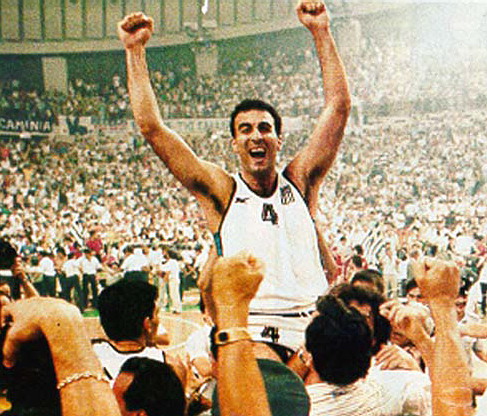 In 1987
the Greek National Basketball Team defy the odds to become
European Champions. Almost instantaneously basketball becomes the national
sport of Greece. Basketball courts spring up everywhere in the
country and football takes a back seat to all but the most fanatic fans. Business
tycoons buy up teams and spend a fortune on impact players, many
of them from the United States. The sudden success of Greek basketball
can be attributed to a number of factors. In the late seventies
and early eighties several Greek coaches begin to study their
American counterparts like University of North Carolina's Dean Smith
and Duke's Mike Krzyzewski, attending seminars in the USA and inviting
the coaches to Greece. The Greek National Team tours the USA
playing the Tarheels, and the Tarheels with Michael Jordan and Sam
Perkins visit Athens to win a tournament there. But the key to Greece's
success is ex-Seton Hall Greek-American guard Nikos Galis, an unstoppable
scorer in college who continues his amazing play in the Greek basketball
league. Galis, considered Greece's Michael Jordan, scored 23 points against the Jordan led NCAA Champions UNC
Tarheels in the tournament in Greece and 26 points in an exhibition game in Chapel Hill 2 years later. (I mention these games in particular because my father went to the game in Greece and I went to the game in Chapel Hill) In the 1987 Euro-basket
championship semi-finals Nikos Galis outscores Yugoslavian Drazen Petrovic
36 to 31 to put Greece in the finals. In the championship game he
scores 40 to lead the Greek team over Russia and set off a
celebration that rivals any Athens has seen in its 3000 year history. In 1987
the Greek National Basketball Team defy the odds to become
European Champions. Almost instantaneously basketball becomes the national
sport of Greece. Basketball courts spring up everywhere in the
country and football takes a back seat to all but the most fanatic fans. Business
tycoons buy up teams and spend a fortune on impact players, many
of them from the United States. The sudden success of Greek basketball
can be attributed to a number of factors. In the late seventies
and early eighties several Greek coaches begin to study their
American counterparts like University of North Carolina's Dean Smith
and Duke's Mike Krzyzewski, attending seminars in the USA and inviting
the coaches to Greece. The Greek National Team tours the USA
playing the Tarheels, and the Tarheels with Michael Jordan and Sam
Perkins visit Athens to win a tournament there. But the key to Greece's
success is ex-Seton Hall Greek-American guard Nikos Galis, an unstoppable
scorer in college who continues his amazing play in the Greek basketball
league. Galis, considered Greece's Michael Jordan, scored 23 points against the Jordan led NCAA Champions UNC
Tarheels in the tournament in Greece and 26 points in an exhibition game in Chapel Hill 2 years later. (I mention these games in particular because my father went to the game in Greece and I went to the game in Chapel Hill) In the 1987 Euro-basket
championship semi-finals Nikos Galis outscores Yugoslavian Drazen Petrovic
36 to 31 to put Greece in the finals. In the championship game he
scores 40 to lead the Greek team over Russia and set off a
celebration that rivals any Athens has seen in its 3000 year history.
|
|