|
Greece has been ruled by
a coalition of vested interests: The Palace, the
Americans, the military leaders, the upper levels
of the civil service and business, and of course
the banks. Greece has become a country
of extreme right and extreme left and in the
middle are a majority of people who are just
trying to survive in a climate of nepotism and
corruption.
|
|
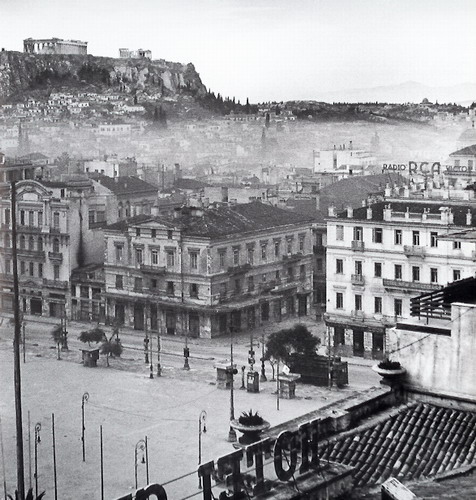 When the Civil War finally ends Greece is in
terrible shape. The country has become
economically dependent on US aid and from 1951 to
1960 almost 12% of the population has emigrated to
Australia, Canada and Germany. If before the war
the struggle for dominating the politics of the
country was between the Republican Venizelists and
the Monarchist Anti-Venizelist, it is now a battle
between the communists and the anti-communist.
Unfortunately for Greece most of the US aid they
are getting, which in other countries in Europe
would have gone to economic development, is going
straight to strengthening the military as a
defense against the communist threat. Because of
this dependence on US money there are few
decisions made without American approval.
It is estimated that during the civil war, instead of the American money going towards weapons and military assistance, they could have given every communist $8000 so they could have become capitalists. Politically the largest party is Constantinos
Tsaldaris' People's Party. There are also
three parties of the center. The Liberals,
led by Sophocles Venizelos, the son of
Eleftherios Venizelos, the National
Progressive Center Union, led by Nikolaos
Plastiras, another Venizelist, and the
Party of George Papandreou.
When the Civil War finally ends Greece is in
terrible shape. The country has become
economically dependent on US aid and from 1951 to
1960 almost 12% of the population has emigrated to
Australia, Canada and Germany. If before the war
the struggle for dominating the politics of the
country was between the Republican Venizelists and
the Monarchist Anti-Venizelist, it is now a battle
between the communists and the anti-communist.
Unfortunately for Greece most of the US aid they
are getting, which in other countries in Europe
would have gone to economic development, is going
straight to strengthening the military as a
defense against the communist threat. Because of
this dependence on US money there are few
decisions made without American approval.
It is estimated that during the civil war, instead of the American money going towards weapons and military assistance, they could have given every communist $8000 so they could have become capitalists. Politically the largest party is Constantinos
Tsaldaris' People's Party. There are also
three parties of the center. The Liberals,
led by Sophocles Venizelos, the son of
Eleftherios Venizelos, the National
Progressive Center Union, led by Nikolaos
Plastiras, another Venizelist, and the
Party of George Papandreou.
|
|
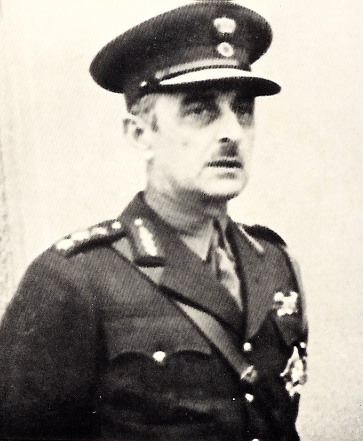 Two more parties appear to contest the 1951
elections, the Democratic Left which takes
the place of the outlawed communist party, and the
Greek Rally, led by Civil War commander
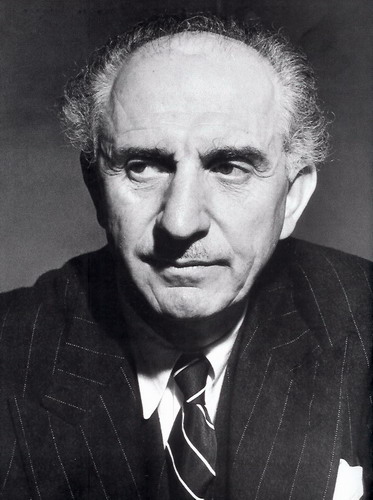
Alexander Papagos (photo). Papagos is the choice of the Americans and the Greek Rally party is the American plan to clean up the image of the right wing and make it attractive to centrist voters. In these
elections the Greek Rally wins the largest share
of the votes but not enough to rule. This leads to
the forming of a coalition of the centrists, which
angers the Americans. The US ambassador
threatens a reduction in US aid unless the country
switches from a proportional to a majority system,
which despite reluctance by everyone except the
right, is implemented in time for the November
1952 elections. Papagos' Greek Rally under the new
system with 49% of the vote gets 82% of the seats.
This enables them to further manipulate the rules
and stay in power for the next ten years. The
Papagos government commutes the death sentences of
those convicted of political crimes and frees many
from incarceration. Private enterprise is boosted
by the devaluation of the drachma and tight
monetary controls. Combined with money being sent
home by those Greeks abroad, some light
family-based industry developing, and the tourists
starting to visit, Greece's economy begins to improve
dramatically by the end of the fifties, though is
still heavily dependent on US aid. Greeks who have
been working overseas make their fortunes and
return to start new businesses in Greece while the
Greek merchant marine emerges as the largest in
the world with the purchase by Greek companies of
the old US Liberty ships that had been built for
the Second World War. Living standards improve
dramatically though unevenly.
Two more parties appear to contest the 1951
elections, the Democratic Left which takes
the place of the outlawed communist party, and the
Greek Rally, led by Civil War commander
Alexander Papagos (photo). Papagos is the choice of the Americans and the Greek Rally party is the American plan to clean up the image of the right wing and make it attractive to centrist voters. In these
elections the Greek Rally wins the largest share
of the votes but not enough to rule. This leads to
the forming of a coalition of the centrists, which
angers the Americans. The US ambassador
threatens a reduction in US aid unless the country
switches from a proportional to a majority system,
which despite reluctance by everyone except the
right, is implemented in time for the November
1952 elections. Papagos' Greek Rally under the new
system with 49% of the vote gets 82% of the seats.
This enables them to further manipulate the rules
and stay in power for the next ten years. The
Papagos government commutes the death sentences of
those convicted of political crimes and frees many
from incarceration. Private enterprise is boosted
by the devaluation of the drachma and tight
monetary controls. Combined with money being sent
home by those Greeks abroad, some light
family-based industry developing, and the tourists
starting to visit, Greece's economy begins to improve
dramatically by the end of the fifties, though is
still heavily dependent on US aid. Greeks who have
been working overseas make their fortunes and
return to start new businesses in Greece while the
Greek merchant marine emerges as the largest in
the world with the purchase by Greek companies of
the old US Liberty ships that had been built for
the Second World War. Living standards improve
dramatically though unevenly.
|
|
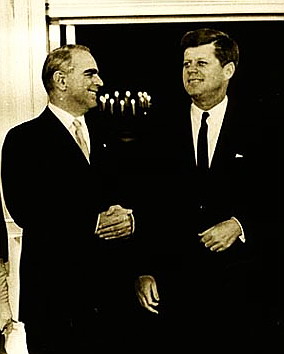 Even relations with Turkey are improved and in
1952 both countries are admitted to NATO. But in 1955 a
political crisis in Cyprus leads to anti-Greek
riots in Istanbul after the home of Attaturk is bombed in Thessaloniki. Later it is discovered that the bomber was a member of the Turkish Secret service, but in the meantime the Turkish press exaggerate the incident and stoke the frenzy of the crowd against non-Muslims. For two days rioters in Istanbul destroy Christian churches, plunder Christian owned shops and invade homes in Greek and Armenian neighborhoods raping and killing. According to the Turkish writer Orhan Pamuk in his excellent book 'Istanbul',
it was later discovered that the rioters had the blessing of the city government which is why the troops that came in to stop them always arrived too late. The end result, probably the desired result, was the final exit from Constantinople of the last of the Byzantines. Istanbul which had a turn-of-the-century population that was half Christian was now almost entirely Muslim.
Even relations with Turkey are improved and in
1952 both countries are admitted to NATO. But in 1955 a
political crisis in Cyprus leads to anti-Greek
riots in Istanbul after the home of Attaturk is bombed in Thessaloniki. Later it is discovered that the bomber was a member of the Turkish Secret service, but in the meantime the Turkish press exaggerate the incident and stoke the frenzy of the crowd against non-Muslims. For two days rioters in Istanbul destroy Christian churches, plunder Christian owned shops and invade homes in Greek and Armenian neighborhoods raping and killing. According to the Turkish writer Orhan Pamuk in his excellent book 'Istanbul',
it was later discovered that the rioters had the blessing of the city government which is why the troops that came in to stop them always arrived too late. The end result, probably the desired result, was the final exit from Constantinople of the last of the Byzantines. Istanbul which had a turn-of-the-century population that was half Christian was now almost entirely Muslim.
Meanwhile in Cyprus, the Greek Cypriots who are 80% of the population of the island want enosis, union
with Greece. The Turks want partition. In the
middle of this new crisis Papagos dies and
Constantine Karamanlis, a minister from
Macedonia, is chosen by King Paul to succeed him.
He becomes the youngest prime minister in Greek
history and his right-wing National Radical
Union gains majorities in the 1956 general
elections, the first in which women are allowed to
vote. A believer in NATO, he is perceived by the
left as being too pro-American, having been
endorsed by both the political attaché of the US
embassy and the local CIA chief. Karamanlis is
criticized by his opponents for allowing the
development of a right-wing shadow government and
for his persecution of the left following the
Civil war, as well as a poorly planned
industrialization which leaves the countryside
desolate, the cities over-populated and people
streaming for the exits to find work abroad.
However for all the criticism of Karamanlis and
his party, they do rebuild the shattered Greek
economy. His biggest mistake though is allowing
the Kentriki
Ypiresia Pliroforion or
KYP
, (the Greek CIA), to create auxiliary forces
made up of shady characters mainly from members of
anticommunist right-wing groups. These gangs do
the police dirty work. They are used to break up
anti-government demonstrations and the peace
movement’s public meetings, such as the one
Grigoris Lambrakis was scheduled to address on May
22, 1963.
|
|
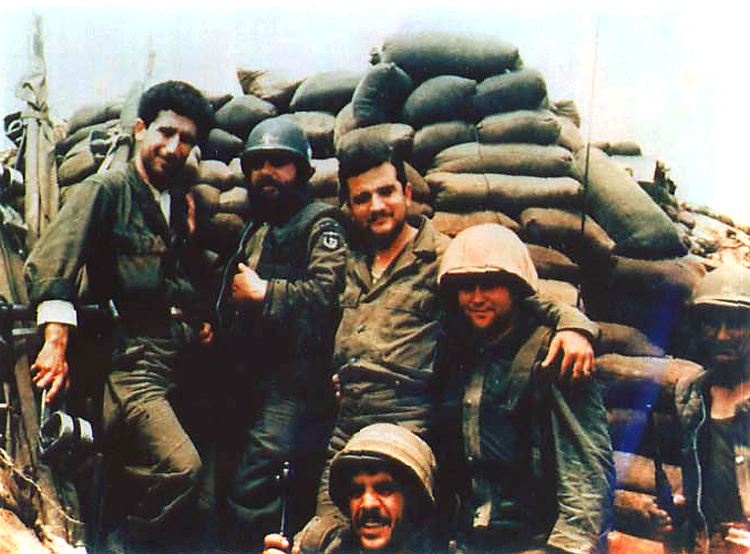 In June of 1953 in far away Korea, an event that parallels the heroics of Leonidas at Thermopylae takes place on a small hill called Outpost Harry (for Haros, meaning Death). Peter Company, and Sparta Battalion, soldiers of the Greek Expeditionary Forces attached to the 15th U.S. Infantry
Regiment with less than 100 men withstand wave after wave of attacks by the Chinese trying to take the hill. For eight days, waves of Chinese Communist Forces stormed Harry’s trench lines--more than 13,000 soldiers in all. And yet each of the
five companies ordered to hold Outpost Harry, when its turn came, held it. The relentless attacks would continue throughout the week, each evening bringing
a flood of Chinese soldiers pouring through barbed wire, and on the worst
nights, into Harry’s trenches. On the seventh day of the siege, Outpost Harry’s defiant, week-long survival
and its continued defense are entrusted to the Greek soldiers of Peter Company,
Sparta Battalion. Just before the midnight hour of June 17, an entire regiment
of nearly 3000 Chinese soldiers burst forth from their positions and stormed the
hill’s northern slope. According to official U.S. military records, “Company P
of the Greek Battalion, refusing to withdraw, closed in and met the attackers in
a furious hand to hand struggle in which many of the enemy were driven off. The
aggressors regrouped, quickly attacked a second time, and again gained the
friendly trenches. Immediately, the Greek Forces launched a series of
counterattacks. After two hours of close-in fighting, the aggressors were again
routed and the friendly positions restored.” In June of 1953 in far away Korea, an event that parallels the heroics of Leonidas at Thermopylae takes place on a small hill called Outpost Harry (for Haros, meaning Death). Peter Company, and Sparta Battalion, soldiers of the Greek Expeditionary Forces attached to the 15th U.S. Infantry
Regiment with less than 100 men withstand wave after wave of attacks by the Chinese trying to take the hill. For eight days, waves of Chinese Communist Forces stormed Harry’s trench lines--more than 13,000 soldiers in all. And yet each of the
five companies ordered to hold Outpost Harry, when its turn came, held it. The relentless attacks would continue throughout the week, each evening bringing
a flood of Chinese soldiers pouring through barbed wire, and on the worst
nights, into Harry’s trenches. On the seventh day of the siege, Outpost Harry’s defiant, week-long survival
and its continued defense are entrusted to the Greek soldiers of Peter Company,
Sparta Battalion. Just before the midnight hour of June 17, an entire regiment
of nearly 3000 Chinese soldiers burst forth from their positions and stormed the
hill’s northern slope. According to official U.S. military records, “Company P
of the Greek Battalion, refusing to withdraw, closed in and met the attackers in
a furious hand to hand struggle in which many of the enemy were driven off. The
aggressors regrouped, quickly attacked a second time, and again gained the
friendly trenches. Immediately, the Greek Forces launched a series of
counterattacks. After two hours of close-in fighting, the aggressors were again
routed and the friendly positions restored.”
It was the last defeat the Chinese Communist Forces could endure in their
pursuit of Outpost Harry. Their failed adventure had in eight days cost them
4200 casualties. Their entire 74th Division had been decimated. And for the
first time in the annals of U.S. military history, five rifle companies
together—four American and one Greek—would receive the prestigious Distinguished
Unit Citation for the outstanding performance of their shared mission. This little known event is the subject of a Documentary film by Director-producer Christos Epperson and writer-producer Michael Epperson and a website dedicated to the memory of the soldiers of the Greek Expeditionary Force who served in the Korean
War. For more information see www.outpostharry.org and www.ophsa.org
|
|
In 1957, Max Merton, the administrator of Thessaloniki during the German occupation returns to Greece to testify in a trial and, despite assurances by the Greek government that this would not happen, is arrested and charged with war crimes during the period of deportation of the Jews. During the trial he testifies that members of the Karamanlis government, including people who were very close to the prime-minister were his contacts and in fact collaborators.
This was an
embarrassment
for Karamanlis especially since he was in negotiations to get Greece into the Common Market. A deal was made and in return for Merton's release after the trial, Germany would support Greece's application for membership.
|
|
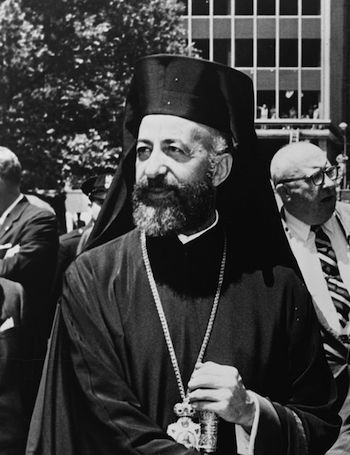 In 1958 Archbishop Markarios the spiritual
leader of the Greek Cypriots, in exile in Athens,
agrees to consider the possibility of independence
for Cyprus instead of enosis. The island
becomes an independent republic within the British
Commonwealth, with British, Greek and Turkish
forces being co-guarantors of the island's
sovereignty. The constitution guarantees the
Turkish minority, which is under 20% of the
population, 30% of the seats in parliament.
Karamanlis is accused of betraying Greece in the
interest of NATO and the Americans. But with the
problem of Cyprus out of the way, or at least
swept under the rug for now, he has the
opportunity to focus on improving the fortunes of
Greece. In 1961 he negotiates an agreement with
the European Economic Community that will pave the
way to full membership. In 1958 Archbishop Markarios the spiritual
leader of the Greek Cypriots, in exile in Athens,
agrees to consider the possibility of independence
for Cyprus instead of enosis. The island
becomes an independent republic within the British
Commonwealth, with British, Greek and Turkish
forces being co-guarantors of the island's
sovereignty. The constitution guarantees the
Turkish minority, which is under 20% of the
population, 30% of the seats in parliament.
Karamanlis is accused of betraying Greece in the
interest of NATO and the Americans. But with the
problem of Cyprus out of the way, or at least
swept under the rug for now, he has the
opportunity to focus on improving the fortunes of
Greece. In 1961 he negotiates an agreement with
the European Economic Community that will pave the
way to full membership.
In the 1958 elections,
George Papandreou has put together a union of
different parties ranging from the far left to the
right in a new party called The Center
Union, which in the elections of 1961 becomes
the opposition party to Karamanlis and the
National Radical Union. The results of this
election are disputed by Papandreou's party and
the United Democratic Left who claim that
the ruling party has won by using the military and
the police to intimidate people and manipulate the
vote in the countryside. Papandreou begins his
Anendotos (unyielding fight) to wrest power
from the right. At the same time Karamanlis has
had a falling out with the King and Queen over a
planned visit to Great Britain which he believes
will cause demonstrations against the continued
imprisonment of political prisoners.
|
|
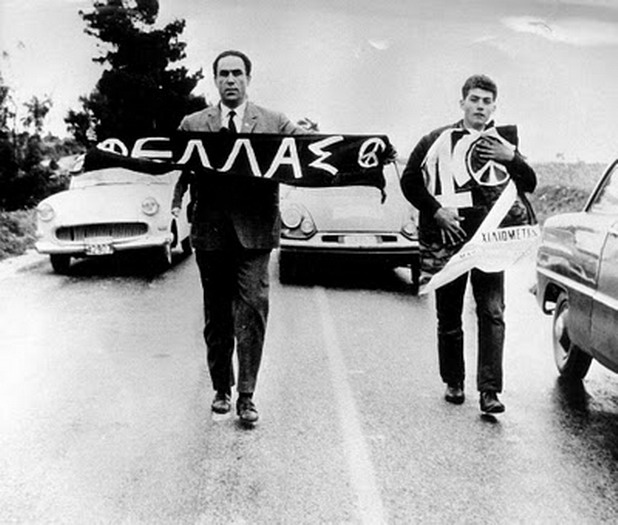 Grigoris Lambrakis
is a parliamentary deputy and leader of the Greek
peace committee. He had been elected to the Greek
parliament in 1961 as a candidate of the
Pan-democratic Agrarian Movement of Greece on the
ticket of the Eniaia
Dimokratiki Aristera
(EDA). Lambrakis is not a
communist or even an admirer of the Soviet Union.
He is an independent socialist as well as a
pacifist; a track and field star who won medals at
the Balkan Games and had used his parliamentary
immunity to march in a peace rally from Marathon
to Athens that had been banned by the police. He
is a rising star, a hero for the young people who
are fed up with the authoritarian right-wing
governments that are like pawns of the Americans, and
who prefer fascism over communism.
Lambrakis is a dangerous character in the eyes of
the monarchy and the Greek government. His
charisma, intelligence and popularity mean that he
is a threat to their interests. He is against
nuclear weapons and pro-peace. To the people in
power this makes him a communist or a sympathiser.
On May 22 1963 Lambrakis goes to Thessaloniki to
address a rally of his followers, despite death
threats. After the event, he is attacked and
killed by hired thugs in plain view of the police.
The killers turn out to be members of a secret
right-wing organization used by the authorities
for such purposes. Lambrakis falls into a coma
and dies a week later. A young magistrate named
Christos Sartzetakis is given the job of
prosecuting the case in the belief that he is a
good soldier and will accept the government line
that this was an accident. Sartzetakis however,
aggressively investigates the incident and
discovers a conspiracy within the police. He
indicts a number of police officials, despite
attempts by the government to intervene and get
him to call it an accident and blame Lambrakis' own
people for inciting a riot. All over Greece the
letter Z appears as graffiti. It means Zei,
or 'he lives'. When a half million people
march in Lambrakis' funeral it is Greece's largest
postwar demonstration and triggers a general
strike that brings Athens to a standstill.
(However the results of the trial are thrown out
after the military coup of April 21 1967. The
movie Z which came out in 1969, during the
dictatorship by Constantine Costa-Gavras is a
historical account of the assassination of
Lambrakis based on the book by Vassilis
Vassilikos.) The Lambrakis affair for Greece was
like Watergate and the JFK assassination rolled
into one. Six months later Karamanlis is defeated
and leaves Athens to live in Paris. Grigoris Lambrakis
is a parliamentary deputy and leader of the Greek
peace committee. He had been elected to the Greek
parliament in 1961 as a candidate of the
Pan-democratic Agrarian Movement of Greece on the
ticket of the Eniaia
Dimokratiki Aristera
(EDA). Lambrakis is not a
communist or even an admirer of the Soviet Union.
He is an independent socialist as well as a
pacifist; a track and field star who won medals at
the Balkan Games and had used his parliamentary
immunity to march in a peace rally from Marathon
to Athens that had been banned by the police. He
is a rising star, a hero for the young people who
are fed up with the authoritarian right-wing
governments that are like pawns of the Americans, and
who prefer fascism over communism.
Lambrakis is a dangerous character in the eyes of
the monarchy and the Greek government. His
charisma, intelligence and popularity mean that he
is a threat to their interests. He is against
nuclear weapons and pro-peace. To the people in
power this makes him a communist or a sympathiser.
On May 22 1963 Lambrakis goes to Thessaloniki to
address a rally of his followers, despite death
threats. After the event, he is attacked and
killed by hired thugs in plain view of the police.
The killers turn out to be members of a secret
right-wing organization used by the authorities
for such purposes. Lambrakis falls into a coma
and dies a week later. A young magistrate named
Christos Sartzetakis is given the job of
prosecuting the case in the belief that he is a
good soldier and will accept the government line
that this was an accident. Sartzetakis however,
aggressively investigates the incident and
discovers a conspiracy within the police. He
indicts a number of police officials, despite
attempts by the government to intervene and get
him to call it an accident and blame Lambrakis' own
people for inciting a riot. All over Greece the
letter Z appears as graffiti. It means Zei,
or 'he lives'. When a half million people
march in Lambrakis' funeral it is Greece's largest
postwar demonstration and triggers a general
strike that brings Athens to a standstill.
(However the results of the trial are thrown out
after the military coup of April 21 1967. The
movie Z which came out in 1969, during the
dictatorship by Constantine Costa-Gavras is a
historical account of the assassination of
Lambrakis based on the book by Vassilis
Vassilikos.) The Lambrakis affair for Greece was
like Watergate and the JFK assassination rolled
into one. Six months later Karamanlis is defeated
and leaves Athens to live in Paris.
|
|
 For the last 10 years Greece has been ruled by
a coalition of vested interests. The Palace, the
Americans, the military leaders, the upper levels
of the civil service and business and of course
the banks, who fully support Karamanlis and the
National Radical Union. Greece is a country
of extreme right and extreme left and in the
middle are a majority of people who are just
trying to survive in a climate of nepotism and
corruption. But in 1963 things begin to change and
the people find a voice in George Papandreou and
his Center Union party who has been leading his
Anendotos (unyielding fight) since the
fraudulent 1961 elections. The Anendotos is
Papandreou's plan to have honest and fair
elections, create a properly functioning
democracy, restrict the King to his constitutional
role and neutralize the military which has become
overly political through the indoctrination by the
right-wing establishment. After winning the
elections with a narrow margin, Papandreou calls
for new elections in which he gets 53% of the
vote. It seems to be a new dawn for democracy, but
those who have held power have no intention of
giving it up and the US has not spent millions to
see Greece fall into the hands of anyone not
willing to obey orders and be a good soldier in
the war against communism.
For the last 10 years Greece has been ruled by
a coalition of vested interests. The Palace, the
Americans, the military leaders, the upper levels
of the civil service and business and of course
the banks, who fully support Karamanlis and the
National Radical Union. Greece is a country
of extreme right and extreme left and in the
middle are a majority of people who are just
trying to survive in a climate of nepotism and
corruption. But in 1963 things begin to change and
the people find a voice in George Papandreou and
his Center Union party who has been leading his
Anendotos (unyielding fight) since the
fraudulent 1961 elections. The Anendotos is
Papandreou's plan to have honest and fair
elections, create a properly functioning
democracy, restrict the King to his constitutional
role and neutralize the military which has become
overly political through the indoctrination by the
right-wing establishment. After winning the
elections with a narrow margin, Papandreou calls
for new elections in which he gets 53% of the
vote. It seems to be a new dawn for democracy, but
those who have held power have no intention of
giving it up and the US has not spent millions to
see Greece fall into the hands of anyone not
willing to obey orders and be a good soldier in
the war against communism.
|
|
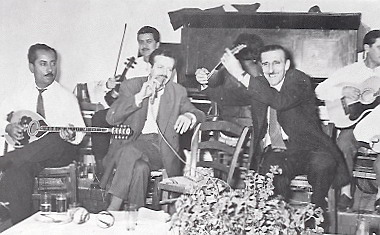 Meanwhile in the world of popular music Greece
is going through a renaissance in the fifties and
early sixties. Rembetika and bouzoukia music had
been looked down upon by the "good" society from
the beginning of the 1920s until the late 1950s or
early 1960s because it was considered the music of
the underworld. The government radio station, ERT
would not play it, but in 1948, a new radio
station (YENED) was created for the benefit of the
armed forces and they began broadcasting some
rembetika with huge success. With a back-log of
emotional and powerful material from the war and
occupation years, and an audience eager to be
entertained, Greek laika and rembetika music is
now heard in the clubs, on the radio and on
records. Musicians like Tsitsanis,
Papayiaonnou, Kaldaras,
Hiotis, Kazantzidis and Markos
Bambakaris are in their heyday.
Meanwhile in the world of popular music Greece
is going through a renaissance in the fifties and
early sixties. Rembetika and bouzoukia music had
been looked down upon by the "good" society from
the beginning of the 1920s until the late 1950s or
early 1960s because it was considered the music of
the underworld. The government radio station, ERT
would not play it, but in 1948, a new radio
station (YENED) was created for the benefit of the
armed forces and they began broadcasting some
rembetika with huge success. With a back-log of
emotional and powerful material from the war and
occupation years, and an audience eager to be
entertained, Greek laika and rembetika music is
now heard in the clubs, on the radio and on
records. Musicians like Tsitsanis,
Papayiaonnou, Kaldaras,
Hiotis, Kazantzidis and Markos
Bambakaris are in their heyday.
|
|
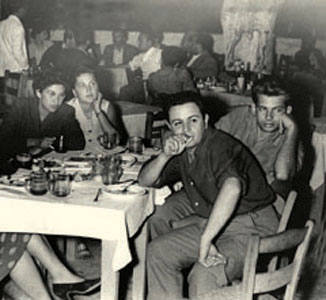 In the 1950s a few people with a sense of what is
real and genuine, begin to frequent the bouzouki
joints which up to then are only frequented by low
class and marginal segments of the population,
(just as in Buenos Aires in the beginning of the
20th century when the Tangerias were originally
frequented by sailors and prostitutes). Among these
people are composer
Manos Hadjidakis
and
Yiannis Tsarouchis,
the painter. In the late
fifties Hadjidakis
composes 2 memorable pieces
called Six Folklore
Paintings/ For A Small White
Seashell. These are
very classical pieces mainly by
Tsitsanis,
Vamvakaris,
Stratos
and
Papaioannou
which are re-orchestrated
by
Hadjidakis
and played by modern
instruments, like piano, violin and cello.
Hadjidakis chose superb songs, like
Arabas
Perna,
Synnefiasmeni
Kyriaki, and
Frangosyriani. The songs were recorded on vinyl and had an
immediate success, acting as eye openers or rather
ear openers with all the segments of the
population. Hadjidakis, who was born in Crete but moved to Athens when he was 7 years old, had been a member of the Greek resistance where he met fellow composer Mikis Theodorakis. Both composers are instrumental in the reemergence of rembetika music and are to become Greece's most well known composers.
In the 1950s a few people with a sense of what is
real and genuine, begin to frequent the bouzouki
joints which up to then are only frequented by low
class and marginal segments of the population,
(just as in Buenos Aires in the beginning of the
20th century when the Tangerias were originally
frequented by sailors and prostitutes). Among these
people are composer
Manos Hadjidakis
and
Yiannis Tsarouchis,
the painter. In the late
fifties Hadjidakis
composes 2 memorable pieces
called Six Folklore
Paintings/ For A Small White
Seashell. These are
very classical pieces mainly by
Tsitsanis,
Vamvakaris,
Stratos
and
Papaioannou
which are re-orchestrated
by
Hadjidakis
and played by modern
instruments, like piano, violin and cello.
Hadjidakis chose superb songs, like
Arabas
Perna,
Synnefiasmeni
Kyriaki, and
Frangosyriani. The songs were recorded on vinyl and had an
immediate success, acting as eye openers or rather
ear openers with all the segments of the
population. Hadjidakis, who was born in Crete but moved to Athens when he was 7 years old, had been a member of the Greek resistance where he met fellow composer Mikis Theodorakis. Both composers are instrumental in the reemergence of rembetika music and are to become Greece's most well known composers. |
|
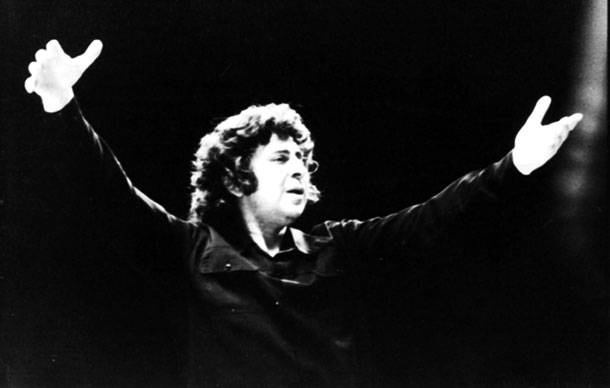 Throughout the fifties and sixties Mikis
Theodorakis is gaining international prestige
while living in Paris, composing many symphonic
works as well as chamber music after having been
imprisoned and tortured in Greece for being a
communist. In 1957 he wins First Prize at the
Moscow Festival. In 1960 he returns to Greece
to found the Small Symphony Orchestra of Athens
and present concerts all over Greece to
familiarize the Greek people with the masterpieces
of symphonic music. When Theodorakis enters the
popular music scene in the sixties he adds some
political flavour to his songs by choosing among
others, the left-wing poet Yiannis Ritsos,
whose poetry he uses for his songs, notably The
Epitaph (Epitaphios). These lyrics contain
direct references to the excesses of the
conservative governments, for instance, he
mentions, the ' smiling young man" and everybody
knows that he referring to Nikos
Beloyiannis, a communist and the legendary
'Man with the Carnation', who was executed
in 1952 as a spy, despite all the European
protests to save him. Theodorakis also refers to
the crimes of the right wing during the Civil
War. His music is far from being faithful to the
rembetika music as Hadjidakis has
been, but it is very popular with the youth who
though they can not openly express their left wing
beliefs can do so by singing Theodorakis' songs.
Theodorakis' music, among other factors, is
responsible for the revival of progressive
political thinking in the 60s. After the murder of
the Grigoris Lambrakis, Theodorakis is elected
president of
the Lambrakis
Youth as well as
being elected to
parliament as a member of the United Democratic
Left. Throughout the fifties and sixties Mikis
Theodorakis is gaining international prestige
while living in Paris, composing many symphonic
works as well as chamber music after having been
imprisoned and tortured in Greece for being a
communist. In 1957 he wins First Prize at the
Moscow Festival. In 1960 he returns to Greece
to found the Small Symphony Orchestra of Athens
and present concerts all over Greece to
familiarize the Greek people with the masterpieces
of symphonic music. When Theodorakis enters the
popular music scene in the sixties he adds some
political flavour to his songs by choosing among
others, the left-wing poet Yiannis Ritsos,
whose poetry he uses for his songs, notably The
Epitaph (Epitaphios). These lyrics contain
direct references to the excesses of the
conservative governments, for instance, he
mentions, the ' smiling young man" and everybody
knows that he referring to Nikos
Beloyiannis, a communist and the legendary
'Man with the Carnation', who was executed
in 1952 as a spy, despite all the European
protests to save him. Theodorakis also refers to
the crimes of the right wing during the Civil
War. His music is far from being faithful to the
rembetika music as Hadjidakis has
been, but it is very popular with the youth who
though they can not openly express their left wing
beliefs can do so by singing Theodorakis' songs.
Theodorakis' music, among other factors, is
responsible for the revival of progressive
political thinking in the 60s. After the murder of
the Grigoris Lambrakis, Theodorakis is elected
president of
the Lambrakis
Youth as well as
being elected to
parliament as a member of the United Democratic
Left.
|
|
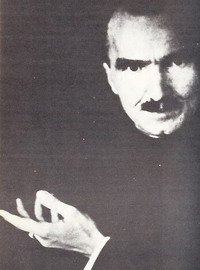 In the world of Modern Greek literature the
great writer Nikos Kazantzakis dies in
1957. One of the most important writers of the
20th century Kazantzakis was a poet and
philosopher, influenced by the writings of
Nietzsche and Bergson and the philosophies of
Christianity, Marxism and Buddhism. Among his
works are The Odyssey: A Modern Sequel,
which continues the story of Odysseus form the
point where Homer leaves off, a poem 333,333
verses long. His book, The Last Temptation of
Christ, is banned by the Roman Catholic Church
and the Greek Orthodox Church which tries to have
him excommunicated. Other well-known books by
Kazantzakis are Freedom or Death, The
Fratricides, The Greek Passion and the
most famous of all Zorba the Greek which in
1964 is made into one of the most popular movies
of all time, starring Anthony Quinn. (The theme
song by Theodorakis becomes the most
popular Greek song of all time played at every
baseball game in the USA to spur home-team rallies
as well as weddings, high school dances and even
bar-mitzvahs.) Other writers of this period
include Yannis Ritsos, who became friends
with Theodorakis on the prison island of
Macronissos, and George Seferis, who
was a great friend of Lawrence Durrell and
Henry Miller, both of whom spent time in
Greece, Miller a few weeks before the war and
Durrell on and off for most of his life. In 1960 Jules
Dassin's film Never On Sunday makes Melina Mecouri an international
star. She wins Best Actress awards
from the Cannes Film Festival and New York Film Critics Circle. The film also
win an
Oscar for Best Song from the soundtrack by Manos Hadjidakis who also
becomes an international celebrity. (The film is later made
into a Broadway musical and Melina is nominated for a Tony
Award.)
In the world of Modern Greek literature the
great writer Nikos Kazantzakis dies in
1957. One of the most important writers of the
20th century Kazantzakis was a poet and
philosopher, influenced by the writings of
Nietzsche and Bergson and the philosophies of
Christianity, Marxism and Buddhism. Among his
works are The Odyssey: A Modern Sequel,
which continues the story of Odysseus form the
point where Homer leaves off, a poem 333,333
verses long. His book, The Last Temptation of
Christ, is banned by the Roman Catholic Church
and the Greek Orthodox Church which tries to have
him excommunicated. Other well-known books by
Kazantzakis are Freedom or Death, The
Fratricides, The Greek Passion and the
most famous of all Zorba the Greek which in
1964 is made into one of the most popular movies
of all time, starring Anthony Quinn. (The theme
song by Theodorakis becomes the most
popular Greek song of all time played at every
baseball game in the USA to spur home-team rallies
as well as weddings, high school dances and even
bar-mitzvahs.) Other writers of this period
include Yannis Ritsos, who became friends
with Theodorakis on the prison island of
Macronissos, and George Seferis, who
was a great friend of Lawrence Durrell and
Henry Miller, both of whom spent time in
Greece, Miller a few weeks before the war and
Durrell on and off for most of his life. In 1960 Jules
Dassin's film Never On Sunday makes Melina Mecouri an international
star. She wins Best Actress awards
from the Cannes Film Festival and New York Film Critics Circle. The film also
win an
Oscar for Best Song from the soundtrack by Manos Hadjidakis who also
becomes an international celebrity. (The film is later made
into a Broadway musical and Melina is nominated for a Tony
Award.) |
|
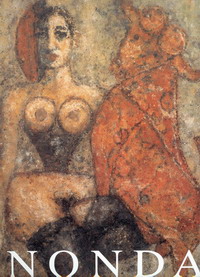 In the world of
visual art a young Greek artist by the name of
Epaminondas Papadopoulos, or Nonda,
is creating a stir in Paris. A member of the
Ecole De Paris and a friend of Andre
Malraux, Pablo Picasso and Nikos
Kazantzakis he is exhibited alongside of
Chagall, Miro, Picasso and
others and hailed as one of the new hopes for
contemporary art. In 1952 he does his first
one-man show in Athens. His erotic paintings of
nude women spark a national scandal. Though
thousands of people wait in line to see his nudes,
the exhibition is closed by the police and not
reopened until Nondas pins fig leaves over
the offending parts. With the support of
Malraux, the French Minister of Culture,
Nondas receives permission to exhibit his work
under the Pont Nuef, the oldest bridge in Paris,
reviving a tradition of outdoor exhibits that has
continued to this day. Nonda continues to exhibit
his paintings and sculptures, influencing some of
the most well-known modern Greek and European
painters. In 1963 his Trojan Horse exhibition at
Pont Nuef creates an international sensation.
Large scale canvases, sculptures, wooden furniture
and objects d'art are displayed around the
centerpiece, a giant Trojan horse made of steel,
wood and newspapers, in which Nonda lives during
the exhibition. Thousands of visitors see the
exhibition which is reviewed in newspapers around
the world.
In the world of
visual art a young Greek artist by the name of
Epaminondas Papadopoulos, or Nonda,
is creating a stir in Paris. A member of the
Ecole De Paris and a friend of Andre
Malraux, Pablo Picasso and Nikos
Kazantzakis he is exhibited alongside of
Chagall, Miro, Picasso and
others and hailed as one of the new hopes for
contemporary art. In 1952 he does his first
one-man show in Athens. His erotic paintings of
nude women spark a national scandal. Though
thousands of people wait in line to see his nudes,
the exhibition is closed by the police and not
reopened until Nondas pins fig leaves over
the offending parts. With the support of
Malraux, the French Minister of Culture,
Nondas receives permission to exhibit his work
under the Pont Nuef, the oldest bridge in Paris,
reviving a tradition of outdoor exhibits that has
continued to this day. Nonda continues to exhibit
his paintings and sculptures, influencing some of
the most well-known modern Greek and European
painters. In 1963 his Trojan Horse exhibition at
Pont Nuef creates an international sensation.
Large scale canvases, sculptures, wooden furniture
and objects d'art are displayed around the
centerpiece, a giant Trojan horse made of steel,
wood and newspapers, in which Nonda lives during
the exhibition. Thousands of visitors see the
exhibition which is reviewed in newspapers around
the world.
|
|
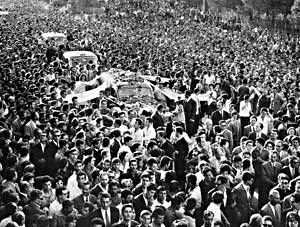 Sculpture in Greece, on the other hand, has a long
way to go before it lives up to the standards of
Praxitelis. On May 29th 1963 a statue of
Harry S. Truman is unveiled in Athens. Created by
Felix W. de Weldon, the creator of the US
Marine Memorial of the Stars and Stripes being
raised at Iwo Jima, the Truman statue is a gift
from the American Hellenic Educational
Progressive Association (AHEPA). The statue
becomes a popular target of political expression
and is blown up numerous times, as well as
spray-painted with anti-US slogans. But mostly
people look at it and wonder why is there a statue
of a US president in the middle of Athens? The sad
irony is that the dedication of Truman's statue
takes place the day after the massively attended
Lambrakis funeral (photo). Clearly there are two
separate courses in Greece. One is for peace and
democracy. The other is for stamping out communism
even at the expense of democracy.
Unfortunately the USA is on the wrong side and
things are about to get worse.
Sculpture in Greece, on the other hand, has a long
way to go before it lives up to the standards of
Praxitelis. On May 29th 1963 a statue of
Harry S. Truman is unveiled in Athens. Created by
Felix W. de Weldon, the creator of the US
Marine Memorial of the Stars and Stripes being
raised at Iwo Jima, the Truman statue is a gift
from the American Hellenic Educational
Progressive Association (AHEPA). The statue
becomes a popular target of political expression
and is blown up numerous times, as well as
spray-painted with anti-US slogans. But mostly
people look at it and wonder why is there a statue
of a US president in the middle of Athens? The sad
irony is that the dedication of Truman's statue
takes place the day after the massively attended
Lambrakis funeral (photo). Clearly there are two
separate courses in Greece. One is for peace and
democracy. The other is for stamping out communism
even at the expense of democracy.
Unfortunately the USA is on the wrong side and
things are about to get worse.
|
|