|
In 1940 the Italians, under the dictator Benito Mussolini, issue an ultimatum to the Greeks demanding they allow the Italian Army to cross into and occupy Greece. It is modern Greece's finest moment and the Greek response inspired the world.
|
|
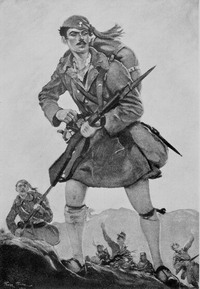 It is the beginning of the Second World War and the Axis powers seem unstoppable as one country after another falls. Mussolini, feeling a bit outplayed by Hitler and wanting to show that he too is a great
leader, decides
to attack and occupy Greece, believing that it will be an easy target. First the Italians torpedo the Greek cruiser Elli in the harbor of the Greek island of Tinos with much loss of life. Then on October 28th the Italian minister in Athens brings the written ultimatum which basically demands that the Greeks let the Italian army enter and occupy the country or face their wrath. Greece's dictator, Ioannis Metaxas, who had hoped to remain neutral
in the war, rejects the ultimatum and in just a few hours Italian troops are pouring into northern Greece from Albania.
This is to be another one of those Hellenic moments like the battles against the Persians in Salamis and Marathon. The people of Greece answer the call to defend the country and in just 6 weeks drive the Italian army back into the cold mountains of Albania. It is a major humiliation for the Axis and the first sign that they can be defeated. It is not only an inspiration to the people of Europe but it puts Hitler in the position of having to delay his invasion of Russia to commit troops to attack and occupy
Greece. The Russian defense of Stalingrad
and the cold Russian winter are the beginning of the end of the Third Reich and Greece's resistance is a major part of the puzzle. It is Metaxas rejection of the Italian Ultimatum which is celebrated every year in Greece as a National Holiday on October 28th as 'Ochi Day'. (Ochi means 'No'). It is the beginning of the Second World War and the Axis powers seem unstoppable as one country after another falls. Mussolini, feeling a bit outplayed by Hitler and wanting to show that he too is a great
leader, decides
to attack and occupy Greece, believing that it will be an easy target. First the Italians torpedo the Greek cruiser Elli in the harbor of the Greek island of Tinos with much loss of life. Then on October 28th the Italian minister in Athens brings the written ultimatum which basically demands that the Greeks let the Italian army enter and occupy the country or face their wrath. Greece's dictator, Ioannis Metaxas, who had hoped to remain neutral
in the war, rejects the ultimatum and in just a few hours Italian troops are pouring into northern Greece from Albania.
This is to be another one of those Hellenic moments like the battles against the Persians in Salamis and Marathon. The people of Greece answer the call to defend the country and in just 6 weeks drive the Italian army back into the cold mountains of Albania. It is a major humiliation for the Axis and the first sign that they can be defeated. It is not only an inspiration to the people of Europe but it puts Hitler in the position of having to delay his invasion of Russia to commit troops to attack and occupy
Greece. The Russian defense of Stalingrad
and the cold Russian winter are the beginning of the end of the Third Reich and Greece's resistance is a major part of the puzzle. It is Metaxas rejection of the Italian Ultimatum which is celebrated every year in Greece as a National Holiday on October 28th as 'Ochi Day'. (Ochi means 'No').
|
|
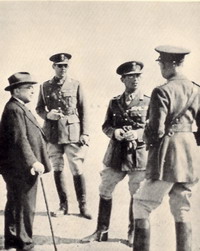 The last thing that Hitler wants is to be bogged down in Greece when he is trying to build up his forces to invade Russia. But he
cannot leave
his southern flank exposed, nor can he allow his Italian partner to suffer such a humiliation. Metaxas knows the Greek army is no match for the German war machine and tries desperately to avert an invasion, hoping instead that Hitler will negotiate a truce on the Albanian front between Greece and Italy. But two months after the death of the Prime Minister-for-Life, on the 6th of April, the German Army invades Greece. Alexander Korysis, who has succeeded Metaxas as prime-minister, commits suicide. The Greeks
and the British
forces are no match for the advancing Germans but manage to hold them long enough for the government of King George II, the Greek Army and the British Expeditionary Force, including Australians and New Zealanders, to be successfully evacuated to Crete where they help the local population to heroically hold off the Nazi invasion of the island until the end of May. They are then evacuated to Egypt to regroup while Greece is occupied by the Germans, Italians and Bulgarians. The last thing that Hitler wants is to be bogged down in Greece when he is trying to build up his forces to invade Russia. But he
cannot leave
his southern flank exposed, nor can he allow his Italian partner to suffer such a humiliation. Metaxas knows the Greek army is no match for the German war machine and tries desperately to avert an invasion, hoping instead that Hitler will negotiate a truce on the Albanian front between Greece and Italy. But two months after the death of the Prime Minister-for-Life, on the 6th of April, the German Army invades Greece. Alexander Korysis, who has succeeded Metaxas as prime-minister, commits suicide. The Greeks
and the British
forces are no match for the advancing Germans but manage to hold them long enough for the government of King George II, the Greek Army and the British Expeditionary Force, including Australians and New Zealanders, to be successfully evacuated to Crete where they help the local population to heroically hold off the Nazi invasion of the island until the end of May. They are then evacuated to Egypt to regroup while Greece is occupied by the Germans, Italians and Bulgarians.
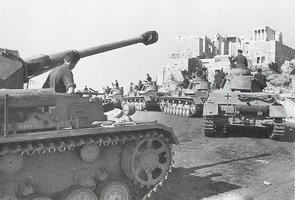 When the Germans enter Athens on April 27th they order one of the Evzones, the elite soldiers of the Greek army who are the guardians of the flag which flies over the Acropolis,
to remove
it. The soldier obeys, then wraps himself in the blue and white flag and leaps from the walls of the ancient fortress to his death. It is the first public act of resistance in the city. A few days later on the night of May 30th, Manolis Glezos and Apostolis Santas, both 18 years old, tear down the Nazi flag flying from the Acropolis. It is an act of courage and resistance to Nazi oppression that becomes an inspiration to all subjected people. It is also foreshadowing that the occupiers will not have an easy
time in Greece. (Glezos, who becomes a member of the Greek resistance, is condemned to death for treason in 1948 and imprisoned for being a communist. He is later elected a member of the Pan Hellenic Socialist Party.) When the Germans enter Athens on April 27th they order one of the Evzones, the elite soldiers of the Greek army who are the guardians of the flag which flies over the Acropolis,
to remove
it. The soldier obeys, then wraps himself in the blue and white flag and leaps from the walls of the ancient fortress to his death. It is the first public act of resistance in the city. A few days later on the night of May 30th, Manolis Glezos and Apostolis Santas, both 18 years old, tear down the Nazi flag flying from the Acropolis. It is an act of courage and resistance to Nazi oppression that becomes an inspiration to all subjected people. It is also foreshadowing that the occupiers will not have an easy
time in Greece. (Glezos, who becomes a member of the Greek resistance, is condemned to death for treason in 1948 and imprisoned for being a communist. He is later elected a member of the Pan Hellenic Socialist Party.)
|
|
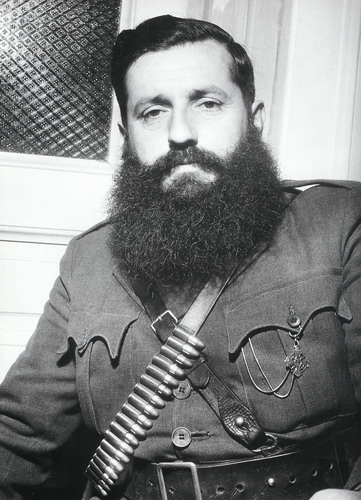 Meanwhile in the mountains of Greece the resistance has sprung up, made up mostly of communists. In September 1941 the National Liberation Front (EAM) is formed. The most important offshoot
of this
group is the National People's Liberation Army or Ethnikos Laikos Apeleftherotikos Stratos (ELAS), which is founded in December 1941 as the military arm of EAM. In the summer of 1942 the first ELAS guerrilla band takes to the mountains. They are led by a capable but ruthless Ares Veloukhiotis (the pseudonym of Athanasios Klaras).
Though EAM is controlled by the Greek Communist Party, its primary cause for now is the liberation of Greece from the Germans and many of their fighters and supporters are neither left nor right. They simply want to resist the Germans. The membership of EAM has been estimated to be anywhere between half a million to two million members, with the ELAS forces somewhere between forty and seventy thousand members. On the other side of the political spectrum, the National Republican Greek League or Ethnikos Dimokratikos Ellinikos Syndesmos" (EDES, ) is non-communist and commanded by General Napoleon Zervas. Women play an important role in the resistance as fighters as well as support. The Greek resistance attack bridges and supply convoys forcing the Germans to keep a large number of troops in the country. In November of 1942 Greek fighters and British soldiers who have been parachuted in to direct the resistance, destroy the Gorgopotamos Viaduct railroad
bridge on the Thessaloniki-Athens railway line. It is the first organised attack in occupied Greece on Axis forces and the most spectacular act of sabotage in occupied Europe up to that time. It is also the first and the only time that the Andarte forces of EDES and ELAS fight together. During the rest of the occupation their differences grew into hatred as fighting the Germans seem to take second place to being in a position to control the country after the liberation. In September of 1943 Civil War breaks
out within the resistance. Meanwhile in the mountains of Greece the resistance has sprung up, made up mostly of communists. In September 1941 the National Liberation Front (EAM) is formed. The most important offshoot
of this
group is the National People's Liberation Army or Ethnikos Laikos Apeleftherotikos Stratos (ELAS), which is founded in December 1941 as the military arm of EAM. In the summer of 1942 the first ELAS guerrilla band takes to the mountains. They are led by a capable but ruthless Ares Veloukhiotis (the pseudonym of Athanasios Klaras).
Though EAM is controlled by the Greek Communist Party, its primary cause for now is the liberation of Greece from the Germans and many of their fighters and supporters are neither left nor right. They simply want to resist the Germans. The membership of EAM has been estimated to be anywhere between half a million to two million members, with the ELAS forces somewhere between forty and seventy thousand members. On the other side of the political spectrum, the National Republican Greek League or Ethnikos Dimokratikos Ellinikos Syndesmos" (EDES, ) is non-communist and commanded by General Napoleon Zervas. Women play an important role in the resistance as fighters as well as support. The Greek resistance attack bridges and supply convoys forcing the Germans to keep a large number of troops in the country. In November of 1942 Greek fighters and British soldiers who have been parachuted in to direct the resistance, destroy the Gorgopotamos Viaduct railroad
bridge on the Thessaloniki-Athens railway line. It is the first organised attack in occupied Greece on Axis forces and the most spectacular act of sabotage in occupied Europe up to that time. It is also the first and the only time that the Andarte forces of EDES and ELAS fight together. During the rest of the occupation their differences grew into hatred as fighting the Germans seem to take second place to being in a position to control the country after the liberation. In September of 1943 Civil War breaks
out within the resistance.
|
|
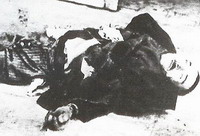 The Germans plunder the country and make the Greeks pay the costs of the occupation. That first year 100,000 Greeks die of starvation, not only due to the Germans, but the government
that has
been installed is both incompetent and corrupt. Even though crop yields are between 15 to 30% lower there is still enough food to feed the population, however the state is unable to organize the collection and transportation. While the masses in the cities starve, the rich are still able to eat due to a thriving black market, and the Greeks in the agricultural areas generally have enough to survive and even prosper, which creates resentment. The Italians and the Germans argue over who is responsible for feeding
the Greeks. Hitler's government does not give the matter high priority and is in fact sending food from the harvests to their troops in North Africa. The Italians have no surplus and are themselves dependent on German imports. But Germany declares Greece is under Italian jurisdiction and therefore the responsibility of the Italians. In Athens people are dying at such a high rate that the Christian Orthodox rites of burial are abandoned. In a culture that believes deeply in honoring the dead, this adds a deep
spiritual and psychological guilt to the people who believe that without proper burial the souls of those who have died wander the city or become vampires. As the famine gets worse mental illness is common as people crack under the strain of extreme hunger. The Germans plunder the country and make the Greeks pay the costs of the occupation. That first year 100,000 Greeks die of starvation, not only due to the Germans, but the government
that has
been installed is both incompetent and corrupt. Even though crop yields are between 15 to 30% lower there is still enough food to feed the population, however the state is unable to organize the collection and transportation. While the masses in the cities starve, the rich are still able to eat due to a thriving black market, and the Greeks in the agricultural areas generally have enough to survive and even prosper, which creates resentment. The Italians and the Germans argue over who is responsible for feeding
the Greeks. Hitler's government does not give the matter high priority and is in fact sending food from the harvests to their troops in North Africa. The Italians have no surplus and are themselves dependent on German imports. But Germany declares Greece is under Italian jurisdiction and therefore the responsibility of the Italians. In Athens people are dying at such a high rate that the Christian Orthodox rites of burial are abandoned. In a culture that believes deeply in honoring the dead, this adds a deep
spiritual and psychological guilt to the people who believe that without proper burial the souls of those who have died wander the city or become vampires. As the famine gets worse mental illness is common as people crack under the strain of extreme hunger.
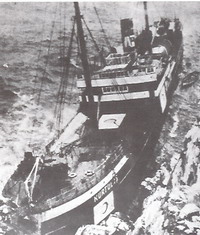 The Greeks believe the famine is a German plan to exterminate them but in actuality it is just indifference. Italy claims the famine is due to the British naval blockade. The British are reluctant to lift their blockade since it is the only form of pressure they have on the Axis but reach a compromise by allowing shipments of grain to come from
Turkey since
it is supposedly within the blockade zone. The Greek War Relief Association in the USA sends funds and in October of 1941 a Turkish ship the SS Kurtulus makes five voyages, bringing food to Athens where it is distributed by the International Red Cross. It is barely enough to make a dent in the plight of the Greeks and in the winter of 1942 the ship meets a tragic end on the rocks near Marmara. The following year under pressure from the people of the USA and England as well as the Vatican, the British
government agrees to end their blockade of Greece to allow food to enter the country so as not to repeat the famine of the first year. On some of the more arid islands the situation is even worse. The Germans have outlawed fishing and this combined with the unavailability of the food that used to be imported from Athens makes the situation desperate. As a result of the famine the psychology of the Greek people changes. They lose faith in government, realizing that officials are just taking care of themselves.
They became alienated from the state and this radicalization by starvation of the working class and bourgeoisie is to last through the 20th century. The Greeks believe the famine is a German plan to exterminate them but in actuality it is just indifference. Italy claims the famine is due to the British naval blockade. The British are reluctant to lift their blockade since it is the only form of pressure they have on the Axis but reach a compromise by allowing shipments of grain to come from
Turkey since
it is supposedly within the blockade zone. The Greek War Relief Association in the USA sends funds and in October of 1941 a Turkish ship the SS Kurtulus makes five voyages, bringing food to Athens where it is distributed by the International Red Cross. It is barely enough to make a dent in the plight of the Greeks and in the winter of 1942 the ship meets a tragic end on the rocks near Marmara. The following year under pressure from the people of the USA and England as well as the Vatican, the British
government agrees to end their blockade of Greece to allow food to enter the country so as not to repeat the famine of the first year. On some of the more arid islands the situation is even worse. The Germans have outlawed fishing and this combined with the unavailability of the food that used to be imported from Athens makes the situation desperate. As a result of the famine the psychology of the Greek people changes. They lose faith in government, realizing that officials are just taking care of themselves.
They became alienated from the state and this radicalization by starvation of the working class and bourgeoisie is to last through the 20th century.
The failure of Mussolini's invasion of Greece, which has forced Germany to invade and occupy, as well as the food crisis which raises the question of who is actually in charge, has created a serious rift in the Axis. The Germans have more respect for the Greeks then for the Italians, not only because the Greeks had defeated the Italians in the Albanian campaign but because the Germans are well read and generally philhellenes and are quite familiar with the
rich history
of the ancient Greeks.
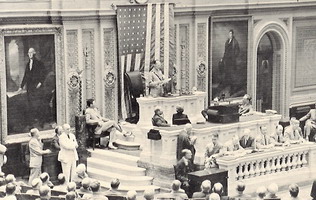 Meanwhile across the Mediterranean, a Greek government in exile has been set up in Egypt while the Greek Army, Navy and Air Force continue to fight on the side of the allies in North Africa and later in the invasion of Italy. The Greek battleship Averoff is sent to patrol the Indian Ocean. King George goes to America to meet with leaders and lobby for aid to Greece. While in Washington DC he addresses both houses of congress. Read King George's speech to the US Congress. In America the papers are full of editorials about the courage of the Greeks. These and cartoons, letters and articles are collected and put out in a book called Lest We Forget, in 1943.
(Excerpts from this book, long out of print, can be read by clicking on the link) George Papandreou, who had been exiled by Metaxas before the war and imprisoned by the occupation, had turned down the offer to become leader of EAM, sends a memorandum to the British Middle East Headquarters which will influence their postwar strategy in regards to Greece. In it he foresees the power the communists would have in Greece after the war and the power the Soviet Union would have as well. In
August of 1943 leaders
of the resistance are flown to Cairo for a meeting with the government in exile. The Greeks all agree that the King should not return until there has been a national referendum. The British disagree and assure King George of their support. Mutiny breaks out among the Greek forces in the middle east as Republican officers and soldiers demand a government of national unity whenever Greece is liberated. George Papandreou is chosen to be Prime Minister, as the only person who can bring together
the extreme
left and right. A month later a conference in Lebanon which includes all the political parties and resistance organizations legitimizes the Papandreous Greek Government in Exile and places EAM-ELAS forces under its command.
Meanwhile across the Mediterranean, a Greek government in exile has been set up in Egypt while the Greek Army, Navy and Air Force continue to fight on the side of the allies in North Africa and later in the invasion of Italy. The Greek battleship Averoff is sent to patrol the Indian Ocean. King George goes to America to meet with leaders and lobby for aid to Greece. While in Washington DC he addresses both houses of congress. Read King George's speech to the US Congress. In America the papers are full of editorials about the courage of the Greeks. These and cartoons, letters and articles are collected and put out in a book called Lest We Forget, in 1943.
(Excerpts from this book, long out of print, can be read by clicking on the link) George Papandreou, who had been exiled by Metaxas before the war and imprisoned by the occupation, had turned down the offer to become leader of EAM, sends a memorandum to the British Middle East Headquarters which will influence their postwar strategy in regards to Greece. In it he foresees the power the communists would have in Greece after the war and the power the Soviet Union would have as well. In
August of 1943 leaders
of the resistance are flown to Cairo for a meeting with the government in exile. The Greeks all agree that the King should not return until there has been a national referendum. The British disagree and assure King George of their support. Mutiny breaks out among the Greek forces in the middle east as Republican officers and soldiers demand a government of national unity whenever Greece is liberated. George Papandreou is chosen to be Prime Minister, as the only person who can bring together
the extreme
left and right. A month later a conference in Lebanon which includes all the political parties and resistance organizations legitimizes the Papandreous Greek Government in Exile and places EAM-ELAS forces under its command.
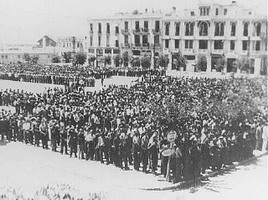 The Jews of Thessaloniki, some who have been in Greece since the Spanish Inquisition and others since ancient times, are an early target for the Nazis. The occupation leaders don't waste any time in taking steps to isolate them
for future
deportation. The Jewish newspapers are closed down. Local anti-Semites are encouraged to post anti-Jewish notices around the city. The Jews are forced to wear the Star of David so they can be easily identified and further isolated from the Greeks. Jewish families are kicked out of their homes to make room for the Germans. Jews are arrested and the Nazi-controlled press tries to turn the public against them. By December the German's begin to demolish the Jewish cemetery. The ancient tombstones are pulled up and
used as building material for sidewalks and walls while families try in vain to stop the destruction. In July of 1942 the Jewish men of Thessaloniki are ordered to gather in Platia Eleftheria (Freedom Square) to register for labor details. Once they are in the square they are forced to do calisthenics, beaten and humiliated while the Greeks of the city look on. The Germans begin the deportations in March of 1943, sending the Jewish inhabitants of Thessaloniki to the Auschwitz death camp on a long journey
packed in box-cars like sardines. By the summer of 1943 the Jews of the German and Bulgarian zones are gone and only those in the Italian zone remain. Jewish property in Thessaloniki is distributed to 'caretakers' who are chosen by special committee. Instead of giving apartments and businesses to the many refugees, they are given to friends and relatives of committee members, and collaborators who for the most part tear the premises apart looking for hidden gold and jewels. The Italians are less willing to round-up
and deport the Jews but once Italy surrenders in September of 1943, the Nazis begin to administer those areas as well, hunting down Jews... and Italians too. The Jews of Thessaloniki, some who have been in Greece since the Spanish Inquisition and others since ancient times, are an early target for the Nazis. The occupation leaders don't waste any time in taking steps to isolate them
for future
deportation. The Jewish newspapers are closed down. Local anti-Semites are encouraged to post anti-Jewish notices around the city. The Jews are forced to wear the Star of David so they can be easily identified and further isolated from the Greeks. Jewish families are kicked out of their homes to make room for the Germans. Jews are arrested and the Nazi-controlled press tries to turn the public against them. By December the German's begin to demolish the Jewish cemetery. The ancient tombstones are pulled up and
used as building material for sidewalks and walls while families try in vain to stop the destruction. In July of 1942 the Jewish men of Thessaloniki are ordered to gather in Platia Eleftheria (Freedom Square) to register for labor details. Once they are in the square they are forced to do calisthenics, beaten and humiliated while the Greeks of the city look on. The Germans begin the deportations in March of 1943, sending the Jewish inhabitants of Thessaloniki to the Auschwitz death camp on a long journey
packed in box-cars like sardines. By the summer of 1943 the Jews of the German and Bulgarian zones are gone and only those in the Italian zone remain. Jewish property in Thessaloniki is distributed to 'caretakers' who are chosen by special committee. Instead of giving apartments and businesses to the many refugees, they are given to friends and relatives of committee members, and collaborators who for the most part tear the premises apart looking for hidden gold and jewels. The Italians are less willing to round-up
and deport the Jews but once Italy surrenders in September of 1943, the Nazis begin to administer those areas as well, hunting down Jews... and Italians too.
|
|
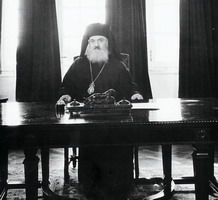 In September of 1943 when the Germans turn their attention to the Jews of Athens, their propaganda is not as effective with the Athenians. The Jewish community has been integrated
into
Athenian life and finds support in a variety of places. Politicians appeal to the German authorities to stop the persecution. Archbishop Damaskinos orders his priests to ask their congregations to help the Jews. Many risk their lives hiding them in their apartments and homes, despite threat of imprisonment. Even the Greek police ignore instructions
to turn over Jews to the Germans. When Jewish community leaders appeal to Prime Minister Constantine Rallis he tries to alleviate their fears by saying that the Jews of Thessaloniki had been guilty of subversive activities and that this is the reason they were deported. At the same time, Elias Barzilai, the Grand Rabbi of the city, is summoned to the Dept of Jewish Affairs and told to submit a list of names and addresses of members of the Jewish community. Instead he destroys the community records thus saving
the lives of thousands of Athenian Jews. He advises the Jews of Athens to flee or go into hiding. A few days later, the Rabbi himself is spirited out of the city by EAM-ELAS fighters and joins the resistance. EAM/ELAS helps hundreds of Jews escape and survive. Many of them stay with the resistance as fighters and/or interpreters. Of the Jewish population of Greece, over 67,000, are deported to Auschwitz, 43,000 from Thessaloniki alone. Only a handful survive. The few who do return to Thessaloniki find more disappointment.
The city has changed beyond recognition. The Jewish cemetery to the east has been bulldozed as have the Jewish neighborhoods. The synagogues had been dynamited by the Germans. Jewish businesses had been given to Greeks as had their homes and few would be returned. In September of 1943 when the Germans turn their attention to the Jews of Athens, their propaganda is not as effective with the Athenians. The Jewish community has been integrated
into
Athenian life and finds support in a variety of places. Politicians appeal to the German authorities to stop the persecution. Archbishop Damaskinos orders his priests to ask their congregations to help the Jews. Many risk their lives hiding them in their apartments and homes, despite threat of imprisonment. Even the Greek police ignore instructions
to turn over Jews to the Germans. When Jewish community leaders appeal to Prime Minister Constantine Rallis he tries to alleviate their fears by saying that the Jews of Thessaloniki had been guilty of subversive activities and that this is the reason they were deported. At the same time, Elias Barzilai, the Grand Rabbi of the city, is summoned to the Dept of Jewish Affairs and told to submit a list of names and addresses of members of the Jewish community. Instead he destroys the community records thus saving
the lives of thousands of Athenian Jews. He advises the Jews of Athens to flee or go into hiding. A few days later, the Rabbi himself is spirited out of the city by EAM-ELAS fighters and joins the resistance. EAM/ELAS helps hundreds of Jews escape and survive. Many of them stay with the resistance as fighters and/or interpreters. Of the Jewish population of Greece, over 67,000, are deported to Auschwitz, 43,000 from Thessaloniki alone. Only a handful survive. The few who do return to Thessaloniki find more disappointment.
The city has changed beyond recognition. The Jewish cemetery to the east has been bulldozed as have the Jewish neighborhoods. The synagogues had been dynamited by the Germans. Jewish businesses had been given to Greeks as had their homes and few would be returned.
At the turn of the century Thessaloniki had truly been a multi-cultural city with Muslims, Greeks, Jews, Slavs and other groups living and working together. After the Balkan Wars and later the exchange of populations between Greece and Turkey after the Asia Minor Catastrophe in 1922 the city had expelled its entire Muslim population and torn down the minarets that had forested the city. The expulsion of the Jews by the Nazis, the blowing up of
the synagogues,
the destruction of the Jewish neighborhoods and cemetery was the final step in the Greek-ification of Thessaloniki.
For more see A Short History of the Jews In Greece.
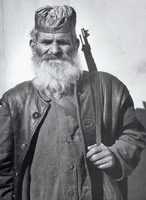 Once the Italians have surrendered and been disarmed, the Germans are in control of Greece. (The Bulgarians have annexed their territory) This means total war on the guerillas who are becoming
more daring.
The respect the German officers have for the descendants of the ancient Greeks begins to dissipate with every attack by the andartes (resistance). They begin to see the villagers as conspirators, harboring the resistance and giving them information on German troop movement. But the Greek terrain favors the guerillas and the Nazis are forced to come up with other methods, including death squads who combat the resistance by killing civilians suspected of being with the andartes or even just sympathising.
(In other words; anyone). Their philosophy is that terror must be answered with terror, in spades, to discourage the rural population from supporting the andartes. This also means killing any men found in an area of armed resistance. As early as June, 1941 the town of Kondomari, Crete was burned to the ground and the men executed as a reprisal for their defense of the island against Nazi paratroopers. As the frustration of the occupying power grows, these acts are more common, eventually becoming an epidemic
of violence against the rural population. Once the Italians have surrendered and been disarmed, the Germans are in control of Greece. (The Bulgarians have annexed their territory) This means total war on the guerillas who are becoming
more daring.
The respect the German officers have for the descendants of the ancient Greeks begins to dissipate with every attack by the andartes (resistance). They begin to see the villagers as conspirators, harboring the resistance and giving them information on German troop movement. But the Greek terrain favors the guerillas and the Nazis are forced to come up with other methods, including death squads who combat the resistance by killing civilians suspected of being with the andartes or even just sympathising.
(In other words; anyone). Their philosophy is that terror must be answered with terror, in spades, to discourage the rural population from supporting the andartes. This also means killing any men found in an area of armed resistance. As early as June, 1941 the town of Kondomari, Crete was burned to the ground and the men executed as a reprisal for their defense of the island against Nazi paratroopers. As the frustration of the occupying power grows, these acts are more common, eventually becoming an epidemic
of violence against the rural population.
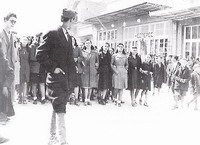 On February 27, 1943 the poet Kostis Palamas dies in Athens. Palamas is one of the most beloved of the modern Greek poets who with his poems and other literary work had created the
standard
for modern Greek language. His historical epics of the liberation had made him a national hero and he had written the Olympic Hymn for the 1896 Olympics. His funeral sparks a torrent of nationalism that is in complete defiance of the Nazi occupiers. After a speech by the poet Angelos Sikelianos calling for a national awakening, the crowd
begins singing the national anthem, shouting Zeto i Ellas, zeto i eleftheria (long live Greece; long live freedom), ignoring the German soldiers. It marks the beginning of a period of demonstrations and strikes against the authorities. On June 25th a massive demonstration is held in Athens after the Germans had executed 100 Greeks for the sabotage of a train taking prisoners to a concentration camp in Larissa. The Greek people have come to the realization that the Nazis and their collaborator regime are
destined to fall and are ready to play their part in speeding up the process. On February 27, 1943 the poet Kostis Palamas dies in Athens. Palamas is one of the most beloved of the modern Greek poets who with his poems and other literary work had created the
standard
for modern Greek language. His historical epics of the liberation had made him a national hero and he had written the Olympic Hymn for the 1896 Olympics. His funeral sparks a torrent of nationalism that is in complete defiance of the Nazi occupiers. After a speech by the poet Angelos Sikelianos calling for a national awakening, the crowd
begins singing the national anthem, shouting Zeto i Ellas, zeto i eleftheria (long live Greece; long live freedom), ignoring the German soldiers. It marks the beginning of a period of demonstrations and strikes against the authorities. On June 25th a massive demonstration is held in Athens after the Germans had executed 100 Greeks for the sabotage of a train taking prisoners to a concentration camp in Larissa. The Greek people have come to the realization that the Nazis and their collaborator regime are
destined to fall and are ready to play their part in speeding up the process.
|
|
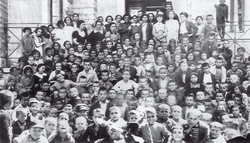 By
August of 1943 the German troops are given the following orders:
"All armed men are to be shot on the spot. Villages from where
shots have been fired or where armed men have been encountered are
to be destroyed, and the men of the village are to be shot. Elsewhere
all men capable of bearing arms are to be rounded up and sent to
Ioaninna." Since the andartes are not a 'real army' and did not
wear uniforms the Germans were to regard all civilians as the enemy.
No attack on the Germans was to go unpunished. If they could not
find the perpetrators then the important people of the village,
doctors, priests, mayors and respected elders were to be arrested and publicly executed.
For every German soldier shot 100 Greeks were to be killed. Reprisal
massacres were somewhat effective. Napoleon Zervas and his EDA group,
now fighting against ELAS and the Germans, with villages now fearful
of helping them, asks for a truce. But other groups realize that
the reprisals are having the opposite effect, in fact making the
Greeks more nationalistic and creating martyrs. ELAS and other
members of the resistance continue
their attacks on the Germans. By
August of 1943 the German troops are given the following orders:
"All armed men are to be shot on the spot. Villages from where
shots have been fired or where armed men have been encountered are
to be destroyed, and the men of the village are to be shot. Elsewhere
all men capable of bearing arms are to be rounded up and sent to
Ioaninna." Since the andartes are not a 'real army' and did not
wear uniforms the Germans were to regard all civilians as the enemy.
No attack on the Germans was to go unpunished. If they could not
find the perpetrators then the important people of the village,
doctors, priests, mayors and respected elders were to be arrested and publicly executed.
For every German soldier shot 100 Greeks were to be killed. Reprisal
massacres were somewhat effective. Napoleon Zervas and his EDA group,
now fighting against ELAS and the Germans, with villages now fearful
of helping them, asks for a truce. But other groups realize that
the reprisals are having the opposite effect, in fact making the
Greeks more nationalistic and creating martyrs. ELAS and other
members of the resistance continue
their attacks on the Germans.
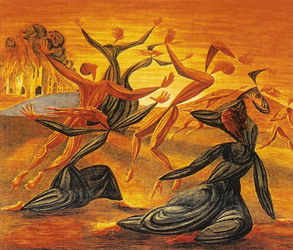 In
December of 1943 as a reprisal for the abduction and killing
of 78 of their soldiers, the German army marches from Tripolis
to the town of Kalavryta, killing everyone they meet along the road. Another
force from Aigion executes 42 men in the village of Kerpini
and then burns it to the ground. In the village of Zachloros they
murder 18 men and throw their bodies into the Vouraikos River,
then burn that village too. They burn the villages of Souvardo
and Vrachni before arriving in the town of Kalavryta, where they
round up the entire male population and take them to Kapis' field
on the edge of town and kill them, mowing them down with machine
guns and individually executing anyone still alive. They burn the village of
Kalavryta down before leaving and the next day burn down the Monastery of Agia Lavra,
the birthplace of the Greek War for Independence, killing 4 monks
and the caretaker. The Drama of Kalavryta" by Dimitris Kaldiris tells the story of
the massacre. The book is an eyewitness account of the murders and contains interviews
with some of the survivors.
The massacre at Kalavryta does not stop the attacks on the Germans, nor
do the Germans stop burning villages. By 1944 over 879 Greek
villages have been totally destroyed. But if burning villages is
supposed to help them end the resistance it is a poor plan because
where does one go when his home and village have been destroyed,
the crops burned and any food taken away by the enemy? You join
the resistance. In
December of 1943 as a reprisal for the abduction and killing
of 78 of their soldiers, the German army marches from Tripolis
to the town of Kalavryta, killing everyone they meet along the road. Another
force from Aigion executes 42 men in the village of Kerpini
and then burns it to the ground. In the village of Zachloros they
murder 18 men and throw their bodies into the Vouraikos River,
then burn that village too. They burn the villages of Souvardo
and Vrachni before arriving in the town of Kalavryta, where they
round up the entire male population and take them to Kapis' field
on the edge of town and kill them, mowing them down with machine
guns and individually executing anyone still alive. They burn the village of
Kalavryta down before leaving and the next day burn down the Monastery of Agia Lavra,
the birthplace of the Greek War for Independence, killing 4 monks
and the caretaker. The Drama of Kalavryta" by Dimitris Kaldiris tells the story of
the massacre. The book is an eyewitness account of the murders and contains interviews
with some of the survivors.
The massacre at Kalavryta does not stop the attacks on the Germans, nor
do the Germans stop burning villages. By 1944 over 879 Greek
villages have been totally destroyed. But if burning villages is
supposed to help them end the resistance it is a poor plan because
where does one go when his home and village have been destroyed,
the crops burned and any food taken away by the enemy? You join
the resistance.
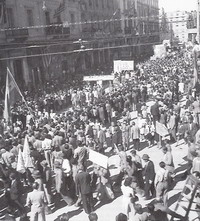 On
February 2nd 1943 the German army surrenders to the Red Army in
Stalingrad. Over a quarter million German soldiers have died
and almost a hundred thousand are taken prisoner. By August of 1944
the Russians have crossed through Romania and into the Balkans.
The Germans in Greece are in danger of being cut off from their
homeland and begin a retreat north. As the last
German soldiers take the swastika down from the Acropolis and begin
to drive through the city towards the road north they pass through
crowds of Athenians in a state of joy, waving the blue and white Greek
flags, embracing, while bells ring all over the city. It is a happy
time for those in Athens who have survived the occupation, but their
joy is not destined to last. They are about to enter the most
divisive period of modern Greek history. Over 400,000 Greeks die
during the Second World War, the vast majority civilians. The Jewish communities, the most ancient in
Europe have been wiped out. Starvation and inflation are so bad
that a loaf of bread costs 2 million drachma and people have traded
property and homes for olive oil to keep their children alive. When
the allies tour the countryside following the German retreat they
do not find happy crowds waving flags, but people who stare, dazed, in
a state of shock over what they have been through. Schools have
been burned to the ground as have the villages which surround them.
Thousands of civilians have been
uprooted and just as many have died. The country is economically bankrupt. There
is little or no industry as
factories have been destroyed and ports and cities are in ruins. The government is
in
chaos. The whole country has to be rebuilt. But first they have to fight
a civil war. The Germans have created and left behind Security Battalions, hardline
anti-communist fighters under the control of the collaborationist
government who are killing suspected communists, and battling ELAS
in the countryside. On
February 2nd 1943 the German army surrenders to the Red Army in
Stalingrad. Over a quarter million German soldiers have died
and almost a hundred thousand are taken prisoner. By August of 1944
the Russians have crossed through Romania and into the Balkans.
The Germans in Greece are in danger of being cut off from their
homeland and begin a retreat north. As the last
German soldiers take the swastika down from the Acropolis and begin
to drive through the city towards the road north they pass through
crowds of Athenians in a state of joy, waving the blue and white Greek
flags, embracing, while bells ring all over the city. It is a happy
time for those in Athens who have survived the occupation, but their
joy is not destined to last. They are about to enter the most
divisive period of modern Greek history. Over 400,000 Greeks die
during the Second World War, the vast majority civilians. The Jewish communities, the most ancient in
Europe have been wiped out. Starvation and inflation are so bad
that a loaf of bread costs 2 million drachma and people have traded
property and homes for olive oil to keep their children alive. When
the allies tour the countryside following the German retreat they
do not find happy crowds waving flags, but people who stare, dazed, in
a state of shock over what they have been through. Schools have
been burned to the ground as have the villages which surround them.
Thousands of civilians have been
uprooted and just as many have died. The country is economically bankrupt. There
is little or no industry as
factories have been destroyed and ports and cities are in ruins. The government is
in
chaos. The whole country has to be rebuilt. But first they have to fight
a civil war. The Germans have created and left behind Security Battalions, hardline
anti-communist fighters under the control of the collaborationist
government who are killing suspected communists, and battling ELAS
in the countryside.
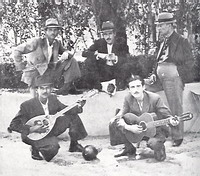 Times of difficulty can often be fruitful for
the creative spirit and some of the best songs were written during
the occupation. Synefiasmeni
Kiriaki by Vassilis Tsitsanis, was probably
the song that most captures the mood of the period
and is perhaps the most well-known song in Greece. On the other
hand songs like Saltadoros by
Mixalis Genitsaris which is about stealing gas cans off German trucks and
Nane Glyko To
Boli, by Mbagianteras, a call to join Ares Veloukhiotis
and the andartes in the mountains,
are songs of resistance. Most were not recorded during the occupation,
for obvious reasons, but in Athens the clubs were open, frequented
by anyone who could afford them, including German officers and their
girlfriends. You can hear later recordings of these songs
by clicking on the links. The first is Tsitsanis playing and Stelios
Kazantzides singing while the second two are from Giorgos Dalaras
excellent album of songs from the occupation called 'Rembetika Tis Katohis' .
(For more see History
of Rembetika) Times of difficulty can often be fruitful for
the creative spirit and some of the best songs were written during
the occupation. Synefiasmeni
Kiriaki by Vassilis Tsitsanis, was probably
the song that most captures the mood of the period
and is perhaps the most well-known song in Greece. On the other
hand songs like Saltadoros by
Mixalis Genitsaris which is about stealing gas cans off German trucks and
Nane Glyko To
Boli, by Mbagianteras, a call to join Ares Veloukhiotis
and the andartes in the mountains,
are songs of resistance. Most were not recorded during the occupation,
for obvious reasons, but in Athens the clubs were open, frequented
by anyone who could afford them, including German officers and their
girlfriends. You can hear later recordings of these songs
by clicking on the links. The first is Tsitsanis playing and Stelios
Kazantzides singing while the second two are from Giorgos Dalaras
excellent album of songs from the occupation called 'Rembetika Tis Katohis' .
(For more see History
of Rembetika)
|
|